Nebraska replacement license plates issue through your county treasurer when a tag goes missing, bends past readable, or ages out, the state plate fee runs $4.10 per plate under Section 60-3,102, and most counters print replacements the same day. A stolen plate adds a step the lost plate skips: the police report comes first, and the report number stands between the owner and whatever the missing tag touches next, toll runs, fuel drive-offs, or worse, all pointing at the registration the plate carries.
Nebraska plate replacement splits into three tracks with different urgency: theft, where the police report and the treasurer notification race the clock; damage and wear, where the readability standard decides the swap; and the reissue cycle, where the county refreshes plates on its schedule regardless of condition. This page covers each track, the document set at the counter, the fee stack, the same-day question, what changes when specialty and message plates need replacing, and how the 2029 single-plate rule cuts the replacement math in half.
How To Replace a Nebraska License Plate
Replacing a lost, stolen, or mutilated Nebraska license plate is a straightforward process managed directly through your local county treasurer office. Under Nebraska Revised Statute Section 60-3,157, the registered vehicle owner must submit a completed Application for Replacement License Plates along with proof of current auto insurance and the standard $4.10 per-plate state replacement fee. If your plates were stolen, state law strongly recommends obtaining a law enforcement incident report first to protect your record.
- Bring the registration proof: the current registration certificate or the record lookup the counter runs on the owner’s ID.
- Report theft first where it applies: the police report number files with the replacement; the treasurer notes the theft on the registration.
- Pay the plate fee: $4.10 per plate under Section 60-3,102.
- Collect the replacement: same-day issue at most counters; mail orders add shipping time.
The counter replaces what the record shows: the standard county-coded pair, the specialty design on the registration, or the message plate combination. Each replacement follows its program’s rules, and the message plate’s custom combination re-screens against issued plates before it reprints.
Stolen Plates: The First 24 Hours
Filing a police report and following official steps for what to do if your plate is stolen protects drivers from unauthorized toll and violation notices. Whether you are managing personal vehicle compliance or handling complex multi-party automotive transactions, proper preparation is key to a seamless process. Review the essential guidelines, statutory criteria, and actionable recommendations detailed below.
- File the police report: the local department records the theft and flags the plate number in the statewide system.
- Alert the treasurer within 48 hours: the flagged record shields your registration from whatever the stolen tag touches next.
- Claim replacements: the $4.10 per-plate fee applies; most counters print the pair while you wait.
Keep the report number. When a camera later tags the stolen plate at a toll plaza or a scene, the police report stands between the owner and the violation. The paper trail dates the theft before the incident.
Partial thefts follow the same track: a stolen front plate on a two-plate vehicle reports the same way, and the replacement pair or single replacement issues at the counter. The registration record decides what replaces. Thieves take fronts for exactly the reason owners put them off: the front tag draws less attention in a parking lot, and a single stolen plate feeds the counterfeit-and-clone market that registration records exist to stop.
Damaged and Worn Plates: When Replacement Is Required
Before appearing in person at your local County Treasurer’s office or submitting automotive applications by mail, you must assemble complete, legally binding documentation. Nebraska administrative law requires original certificates and state-approved application forms to establish clear legal ownership and statutory eligibility. Ensure you bring the mandatory documents and credentials listed below.
- Faded past readable: sun-bleached characters that fail the twenty-foot test draw the same citation as an obscured cover; replacement cures it.
- Bent or crumpled: a tag that cannot mount upright fails the display standard; the counter replaces it.
- Corroded mounts: salt-state rot that eats the bolt holes; the replacement pair rides new hardware.
- Defaced or altered: any modification to the characters is its own violation class; replacement with a clean issue is the only cure.
Wear replacement runs the same counter transaction as any swap, registration proof, the $4.10 fee, and the same-day issue where the counter prints. Drivers who catch the fade before the stop catch it at the treasurer; drivers who catch it at the stop pay the citation and the fee together.
The fade catches plates in clusters, garage-kept cars run tags a decade; street-parked cars in the sun belt of a parking lot bleach the print in seasons. The reflective sheeting ages on its own schedule: characters dim first, the county prefix holds longest, and the officer’s read runs on the whole tag’s contrast. A plate that photographs cleanly at arm’s length can still fail the twenty-foot test the statute applies, the distance is the standard, and the arm’s-length check misses exactly the plates the citation catches. Drivers who shoot the tag from across the driveway, phone flash off, read the answer the officer will.
Impact damage runs the other direction, the tag bends on the curb strike, the garage edge, the parking-lot pole, and the crease that holds past a quarter-inch stops reading as upright at a glance. The repair shop straightens bumpers, not tags: the creased plate replaces at the counter, the $4.10 buys a flat readable face, and the citation the crease invited never writes.
What Replacement Costs: The Fee Stack
| Item | Fee | Reference |
|---|---|---|
| Standard plate replacement — per plate | $4.10 | Section 60-3,102 |
| Two-plate replacement (car or pickup) | $8.20 | Both plates, current cycle |
| County official fee where it applies | $1.50 | Section 60-3,141 |
| Message plate combination reprint | $40.00 program fee | Re-screened before reprint |
| Specialty design replacement | Program production fee | Set per design |
The stack repeats at every replacement: the plate fee under Section 60-3,102, the county official fee under Section 60-3,141 where the transaction carries it, and the program premiums where the design carries one. The 2029 single-plate rule halves the two-plate line for covered vehicles at the reissue, one plate to lose, one to replace, the same $4.10 on the single tag.

Same-Day Replacement: What Counties Issue on the Spot
Navigating the administrative rules and practical requirements for same-day replacement: what counties issue on the spot requires careful attention to both Nebraska Department of Motor Vehicles regulations and local County Treasurer practices. Whether you are managing personal vehicle compliance or handling complex multi-party automotive transactions, proper preparation is key to a seamless process. Review the essential guidelines, statutory criteria, and actionable recommendations detailed below.
- Standard county-coded plates: stock at the counter; the swap prints and hands over in one visit at most counties.
- Specialty designs: program stock varies; the counter quotes the wait per design, and production orders mail after printing.
- Message plates: the combination re-screens, then the reprint follows the program’s production schedule; current plates stay on the car until the replacement lands.
- Validation stickers: reprint with the replacement; the registration record carries the month forward.
Mail orders trade the same-day handoff for the wait: the treasurer ships the replacement to the record’s address, and the road runs on the current tag until the mail lands, legal where the registration stands current, citable where the tag on the car fails the readability test.
Replacing One Plate of the Pair
Navigating the administrative rules and practical requirements for replacing one plate of the pair requires careful attention to both Nebraska Department of Motor Vehicles regulations and local County Treasurer practices. Whether you are managing personal vehicle compliance or handling complex multi-party automotive transactions, proper preparation is key to a seamless process. Review the essential guidelines, statutory criteria, and actionable recommendations detailed below.
- One-plate replacement: the counter issues the single tag at $4.10; the surviving plate stays on the vehicle.
- Pair mismatch on the record: the registration notes the replacement; the new front pairs with the standing rear on paper.
- When the counter swaps the pair: design reissues and cycle refreshes replace the set; a single-plate order inside a reissue window may wait for the cycle instead.
Drivers with one sound plate and one past-readable plate replace the failed tag alone, the readable survivor serves until the record calls the pair. The twenty-foot test on both ends tells which half needs the counter.
Specialty and Message Plate Replacements
Navigating the administrative rules and practical requirements for specialty and message plate replacements requires careful attention to both Nebraska Department of Motor Vehicles regulations and local County Treasurer practices. Whether you are managing personal vehicle compliance or handling complex multi-party automotive transactions, proper preparation is key to a seamless process. Review the essential guidelines, statutory criteria, and actionable recommendations detailed below.
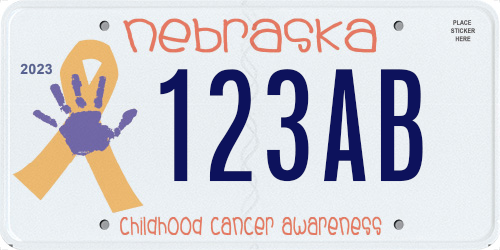
- Cause plates: the design reprints through the program; the production fee applies above the $4.10 plate fee.
- Organization and military plates: eligibility documents re-file with the replacement where the program demands them; the plate belongs to the approved holder.
- Message plates: the custom combination re-screens against issued plates, a combination available at first issue can fail at reprint if another registration claimed it in the window between.
- County message plates: Douglas, Lancaster, and Sarpy programs replace through their county channels on the same structure.
The program premiums ride every reprint, the replacement stack for a specialty design runs the plate fee plus the program fee, the same arithmetic as the first issue.
Lost Registration and Plate Paperwork Together
Before appearing in person at your local County Treasurer’s office or submitting automotive applications by mail, you must assemble complete, legally binding documentation. Nebraska administrative law requires original certificates and state-approved application forms to establish clear legal ownership and statutory eligibility. Ensure you bring the mandatory documents and credentials listed below.
- Duplicate registration: prints at the treasurer counter on owner ID.
- Duplicate title: the application restores the ownership chain; the registration cures after the title prints.
- Replacement plates: issue against the restored record, the stack runs plate fee plus duplicates as the record demands.
The order matters because the record cures before the plates issue, and the counter sequence keeps a lost-paperwork afternoon from turning into a lost-registration month.
Out-of-State Drivers: Replacing Nebraska Plates from Away
Navigating the administrative rules and practical requirements for out-of-state drivers: replacing nebraska plates from away requires careful attention to both Nebraska Department of Motor Vehicles regulations and local County Treasurer practices. Whether you are managing personal vehicle compliance or handling complex multi-party automotive transactions, proper preparation is key to a seamless process. Review the essential guidelines, statutory criteria, and actionable recommendations detailed below.
- The mail order: the treasurer ships replacements to the record’s address; the current tag runs the road until the mail lands.
- Stolen from another state: the police report files where the theft happened; the Nebraska treasurer takes the report number with the replacement order.
- Military and students: the residency protections hold the Nebraska registration; replacements mail to the duty or school address on the record.
The situs rule does not pause for distance, the county that holds the registration issues the replacement, wherever the mailbox sits.
What Changes at the 2029 Reissue
Navigating the administrative rules and practical requirements for what changes at the 2029 reissue requires careful attention to both Nebraska Department of Motor Vehicles regulations and local County Treasurer practices. Whether you are managing personal vehicle compliance or handling complex multi-party automotive transactions, proper preparation is key to a seamless process. Review the essential guidelines, statutory criteria, and actionable recommendations detailed below.
- One plate to replace: the $8.20 two-plate swap becomes a $4.10 single-plate transaction for reissued vehicles.
- The reissue refresh itself: the cycle replaces aging plates on the county’s schedule; a worn tag at the reissue window waits for the cycle rather than replacing twice.
- Multiyear registration: qualifying registrations stretch the term; the replacement calendar stretches with it.
Until the cycle reaches a registration, the two-plate replacement math stands, and the theft-report-first rule keeps its urgency either way: one stolen plate or two, the report protects the owner before the replacement protects the vehicle.
Counter Visit Checklist: What To Bring
Before appearing in person at your local County Treasurer’s office or submitting automotive applications by mail, you must assemble complete, legally binding documentation. Nebraska administrative law requires original certificates and state-approved application forms to establish clear legal ownership and statutory eligibility. Ensure you bring the mandatory documents and credentials listed below.
- Photo ID: the counter verifies the owner against the registration record.
- Current registration certificate: where the paperwork survived; the counter can look up the record on ID alone.
- Police report number: theft replacements file the report with the order.
- The surviving plate is the one-plate replacement paired against the standing tag; bringing it settles the pair question at the counter.
- Payment: $4.10 per plate plus any program or county fees the transaction carries.
Counters replace on the record alone where the paperwork burned with the garage, the ID lookup answers what the folder cannot. The full set turns a two-visit afternoon into a one-visit errand.
When Plates Age Out: The Reissue Calendar
Nebraska vehicle administrative law strictly enforces statutory deadlines for registration renewals, title transfers, and temporary permit expirations. Failing to file within established state windows triggers automated statutory late fees and exposes motorists to unlawful operation citations under Nebraska Revised Statutes. Review the critical statutory timelines and filing deadlines outlined below.
- A worn plate near the reissue window: the cycle refresh replaces the set on the county’s schedule; replacing a months-from-retirement tag pays the fee twice inside a year.
- A worn plate years from the window: the counter replacement carries the registration to the cycle; the fee pays once.
- The 2029 cycle: LB97’s single-plate reissue replaces the pair with one tag at the refresh, the replacement math changes with the plate count.
Counter staff quote the cycle’s reach against the registration at any visit, the timing question answers before the fee pays.
Plate Theft Patterns: What Thieves Take and Why
Navigating the administrative rules and practical requirements for plate theft patterns: what thieves take and why requires careful attention to both Nebraska Department of Motor Vehicles regulations and local County Treasurer practices. Whether you are managing personal vehicle compliance or handling complex multi-party automotive transactions, proper preparation is key to a seamless process. Review the essential guidelines, statutory criteria, and actionable recommendations detailed below.
- Front plates: the low-attention grab; a missing front reads as a nuisance violation, and the stolen tag feeds clone and counterfeit stock.
- Rear plates on trailers and parked rigs: unattended units in storage lots; the tag surfaces on a cloned vehicle a state away.
- Stickers and partial tags: the validation sticker lifts with a razor; the plate stays, yet the registration reads stolen on the street.
The report-first rule answers all three: the flagged plate number in the police system catches the clone at its first reader, and the owner’s report number answers the toll notice before it collections. The replacement fee is the cheap half; the report is the half that protects the owner.
Replacement Plates and the Selling Window
Nebraska vehicle administrative law strictly enforces statutory deadlines for registration renewals, title transfers, and temporary permit expirations. Failing to file within established state windows triggers automated statutory late fees and exposes motorists to unlawful operation citations under Nebraska Revised Statutes. Review the critical statutory timelines and filing deadlines outlined below.
- Replace before the handoff: a complete pair transfers clean; the buyer registers against a full set and the display duty reads satisfied from day one.
- Sell with the survivor: a one-plate sale hands the buyer a counter visit with the title transfer; the replacement fee lands on the transaction either way.
- Stolen-plate sales: the report clears the record before the transfer; a plate flagged stolen stalls the buyer’s registration until the theft record closes.
Buyers check the pair at the handshake, two tags, readable characters, current stickers, the thirty-second check that prevents a first-week citation on a fresh purchase.
DIY Mounting After Replacement
Motor vehicle standards in Nebraska are codified under Nebraska Revised Statutes Chapter 60, establishing mandatory operational criteria for every vehicle on public roadways. Both state administrative directives and local county enforcement operate under these statutory mandates to maintain statewide public safety and vehicle identification integrity. The core legal rules and statutory obligations governing this area include.
- Seat the tag on the mount: the factory bracket, the tow-hook mount, or the bumper well the old plate left.
- Bolt through the slots: plate bolts seat the tag firm; the swing test settles the hold.
- Run the twenty-foot read: characters and stickers readable from the distance an officer stands.
- Retire the old tag: the damaged or stolen plate never remounts; the record closed its service.
The same driveway check that keeps the original legal keeps the replacement legal, the tag changed, the statute did not.
Frequently Asked Questions
Review essential answers to common questions about replacing lost, damaged, or stolen license plates in Nebraska. Learn about counter processing times, state plate replacement fees, handling partial plate losses, and how the upcoming 2029 transition to a single rear plate will simplify replacement procedures across all 93 state counties.
How much does it cost to replace a license plate in Nebraska?
$4.10 per plate under Section 60-3,102, $8.20 for the two-plate pair on covered vehicles through the current cycle. The county official fee applies where the transaction carries it, and specialty or message designs add their program premiums above the plate fee. The 2029 single-plate reissue halves the pair math for reissued vehicles.
How do I replace a lost or stolen plate in Nebraska?
Theft takes the police report first, the report number files with the replacement and protects the owner when the tag surfaces in a violation. Then the county treasurer: registration proof, the plate fee, and the same-day issue at most counters. Lost plates skip the report and run the counter sequence directly.
Can I drive with one plate before the replacement arrives?
The road runs on the readability standard, not the wait. A missing plate reads as a display violation on observation, the replacement gap cites the same as the original loss. Drivers who lost a plate drive on the lawful survivor only where the class permits single-plate display; two-plate vehicles need both tags mounted through the current cycle.
Do I get new plate numbers when I replace plates in Nebraska?
The registration record decides. Standard replacements reprint the issued combination; the surviving plate pairs with the replacement on the record. Message plate reprints re-screen the custom combination, a taken combination forces a new choice at reprint. The reissue cycle refreshes plates on its schedule, and the new issue carries the cycle’s combination.
How long does a plate replacement take in Nebraska?
Standard county-coded plates print same-day at most treasurer counters, one visit, one fee, one handoff. Specialty designs and message reprints follow program production schedules and mail after printing; the current plates keep the car legal through the wait. Mail orders add shipping to whatever the counter quotes.