Nebraska disability parking runs on two products: plates that mount on one registered vehicle, and placards that hang in any car the certified person rides in. Both start with a certification, the physician statement that ties the condition to the parking need, and both end at the same accessible space near the door. A placard belongs to the person, and a plate belongs to the vehicle, and that difference drives every rule on this page. One physician statement supports either product at the same counter.
This page covers the choice between plates and placards, the physician statement that starts the file, the permanent and temporary terms, where a placard serves and where it does not, the parking privileges the paper carries, the fee lines, the application steps at the treasurer, the renewal rules, and the misuse penalties. The sections follow the path from the doctor visit to the counter and back to the parking lot. Read the parking section before the first trip, because display rules decide most disputes at the space. The tables compare the products, the lists carry the checklists, and the last section gathers the mistakes the counter sees every week.
Plates or Placards: The Basic Choice
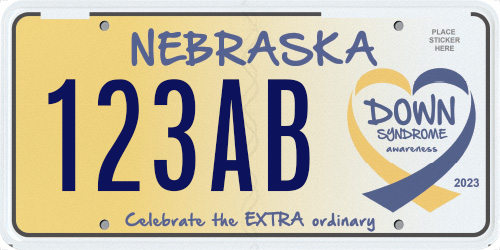
Nebraska provides two distinct accommodations for individuals with qualifying physical disabilities: permanent metal disability license plates and portable disability parking placards. While metal disability plates are permanently attached to a specific motor vehicle owned by the individual, portable blue (permanent) or red (temporary) placards can be moved between any vehicle providing transportation to the permit holder. Evaluating whether you frequently travel in vehicles owned by family members or friends will help you choose the best option.
Households often run both. The plate covers the car the certified person drives daily, and the placard rides in the glovebox for appointments in a family car, a taxi, or a friend’s ride. One certification supports either product, and the county issues both on the same physician statement.
Choose by use, not by habit. A certified person who rarely drives benefits from the placard, and a certified person who drives one car every day benefits from the plate, with the placard as the backup for the rest of the fleet. One certification supports both, and the household upgrades from placard to plate whenever the travel pattern settles.
The two disability products side by side.
| Line | Disability plates | Parking placard |
|---|---|---|
| Where it works | The vehicle it is registered to | Any vehicle the person rides in |
| Display | Mounted like any plate | Hung from the mirror while parked |
| Term | Runs with the vehicle registration | Runs on its own term |
| Best fit | The main driver of one car | Riders who switch vehicles |
The Physician Statement Starts the File
A licensed physician, or a provider type the form allows, signs the certification that the applicant holds a disability limiting mobility. The statement names the condition in the terms the form asks for, and the signature dates the paper for the application. No signature, no product, whatever the parking need itself.
The DMV prints the certification form, and the doctor’s office completes its block at a visit or by fax. Applications without the completed block reject at the counter, and the staff hands the form back for the medical side. Bring the paper finished, and the filing runs in one visit. Ask the clinic to date the statement near the filing date, because a stale paper slows the counter and can force a second trip.
Call the clinic before the trip. Many offices turn the certification around the same day, and some fax the block straight to the county, which shortens the path from diagnosis to parking space.
- Who signs: the treating physician or a provider type the form lists.
- What it states: the qualifying condition and the mobility limit.
- How long it lasts: the certification term the form sets for the case.
- Who files it: the applicant, at the county treasurer or by mail.
Permanent Terms and Temporary Terms
The two terms serve two very different cases. A permanent certification covers a long-term disability, and the product renews on the cycle the county posts. A temporary certification covers a recovery with an expected end, a surgery rehab or a broken hip, and the paper carries an expiration the doctor sets.
The temporary placard exists for the healing months, and it ends on the date the certification names. A case that runs long re-certifies with the doctor, and the county reissues on the new paper. A permanent case skips the re-certification loop and renews on the standard calendar instead.
The distinction matters most at renewal time. Temporary products ask for fresh medical paper when they lapse, and permanent ones move on the posted cycle without a clinic stop. Match the term to the honest expectation, because the doctor’s dates control the paper either way. Keep the temporary papers honest, because the county cannot stretch a date the doctor never wrote. The clinic renews the statement on one visit, and the county takes the fresh paper the same week.
Ask the doctor to date the certification close to the application date, because a stale paper slows the counter and can force a repeat visit.
Where the Placard Serves
An official Nebraska disability parking placard grants authorization to park in designated accessible parking spaces across all public and private parking facilities statewide, as well as providing reciprocal parking privileges throughout the United States. The permit must be hung securely from the vehicle’s rearview mirror whenever the vehicle is parked in an accessible stall, but state law requires drivers to remove the hanging placard while the vehicle is in motion to prevent windshield visibility obstruction.

The rule reads in one line: the certified person, riding in the vehicle, activates the privilege. A placard left hanging on an errand run without the holder misuses the paper, and misuse carries penalties that reach the privilege itself. Officers check the match at the space, the paper against the rider. One certification covers both products, and the county issues them on the same visit when the papers are complete. The officers write on the display, so the rider who hangs the paper first settles the space check.
The plate version ties to its registered vehicle alone, which is why the two products often run together in one family. The plate answers the daily car, and the placard answers everything else the certified person rides.
- Own car: the placard serves the household car the certified person rides in.
- Family rides: a spouse or adult child driving the person to appointments hangs the placard.
- Cab and rideshare: the placard serves the vehicle that transports the person.
- Careful line: the privilege serves trips the certified person takes, not errands without them.
Parking Privileges the Paper Carries
The plate or placard serves the marked accessible spaces, the striped spots near entrances with the signage and the access aisles. The products also carry the parking terms each city sets, and local rules decide questions like meter time and time-limit exemptions.
Access aisles stay off limits in every case. The striped space beside a spot exists for ramps and lifts, and parking on the stripes blocks a chair from unloading. A placard in the window covers the vehicle, not the aisle, and the citation for blocking one reads the same as the citation for the marked spot itself.
Display decides most disputes at the space. The placard hangs from the mirror while parked and comes down while driving, and the plate serves by its mount. Officers check the certification match, the certified person in the car, and the display before writing anything. Hang the placard before you leave the car, because a paper nobody can read from the driver seat reads as a plain violation at the space.
Take the twenty-foot test to the space as well: a plate or placard an officer cannot read from the driver seat invites the question the display rules were written to settle.
The Fee Lines
In Nebraska, issuing an official disability parking placard is completely free of charge to eligible applicants. If an individual chooses to obtain specialized metal disability license plates for their personal vehicle, standard state motor vehicle taxes, county administrative fees, and the $4.10 plate manufacturing fee still apply, but no extra specialty surcharge is added to the bill.
Where a disability plate replaces a standard plate at renewal, the stack matches the ordinary registration: the plate fee under Section 60-3,102, the county fee at $1.50 under Section 60-3,141, and the state tax and fee classes on the vehicle age. The placard runs outside the registration stack, and the county schedule carries its line. Ask for the printed total at the first filing, because the placard line and the plate line sit on different schedules. The receipt documents both lines for the renewal years ahead. Bring the payment in the form the counter posts.
Ask the counter for the printed total on the first filing, because the placard line and the plate line live on different schedules, and the receipt documents both for the years ahead.
The money lines on a disability filing.
| Line | Amount | Applies to |
|---|---|---|
| Plate fee | $4.10 per plate, $8.20 a pair | Disability plates |
| County fee | $1.50 | Registration filings |
| Placard fee | The fee the county schedule charges | Placards |
| Tax and fee classes | The state lines on the vehicle | Plate route |
Applying: The Counter Sequence
Applying for a Nebraska disability parking permit begins with obtaining an official Application for Handicapped Parking Permit (Form DMV 07-08), which must be completed and certified by a licensed medical physician, physician assistant, or advanced practice registered nurse. Once the medical certification is signed, the applicant can present the form at any local county treasurer office or mail it to the Nebraska DMV Driver and Vehicle Records Division in Lincoln for prompt issuance.
Placards often issue across the counter the same day, and plates follow the standard print window the county quotes. Mail-in filings serve applicants who cannot travel, and the office confirms the mail path on the phone. Either way, the certification paper is the hinge, and a complete set keeps the trip count at one. Build the folder the night before, and the counter clears the whole set in one pass. The placard-only route needs the ID and the certification alone, because the product files on the person, and that short set is the fastest filing in the plate world.
Bring the vehicle papers on the plate route and leave them home on the placard-only route, because the placard files on the person, not on the car.
- Step one: the doctor completes the certification block on the state form.
- Step two: the applicant gathers photo ID and the vehicle papers for plates.
- Step three: the fees pay at the posted lines.
- Step four: the plates print or the placard issues, and the counter quotes any wait.
Renewal Rules on Both Products
Disability plates renew with the vehicle. The staggered month by surname initial applies, the stickers post on the plate corner, and the renewal stack repeats the county fee and the state lines. The disability designation carries through the cycle without new medical paper on a permanent certification.
Placards renew on their own term. A permanent placard renews on the cycle the county posts, and a temporary placard ends on the certification date, with a fresh physician statement required for a reissue. The ClickDMV portal handles many vehicle renewals, and the placard side answers at the counter in most counties.
Calendar discipline matters more here than anywhere else in the plate world. A lapsed placard turns an ordinary space into a citation risk, the renewal fees stay modest, and the reminder habit costs nothing and saves the spot near the door. Mark the renewal month on the phone the day the product issues, because the lapsed month reads as a citation risk at the space. The plate route renews on the vehicle cycle, and the placard route renews on its own, so keep both dates in one place.
Set the reminder on the phone the day the product issues, because the renewal month arrives faster than any calendar in the glovebox.
Misuse and the Penalty Angle
Nebraska law strictly safeguards designated accessible parking spaces to ensure they remain available for individuals with genuine mobility impairments. Under Nebraska Revised Statute Section 18-1741, unauthorized parking in a designated accessible stall, using another person’s disability placard without that person present, or altering a permit is a class III misdemeanor punishable by fines up to $500, vehicle towing at the owner’s expense, and permanent revocation of parking privileges.
Report suspected misuse to the local police non-emergency line with the plate and the place, and the citation runs like any parking case from there. The report protects the spaces for the people the paper was written for. Report the case the same week you see it, because a fast report shortens the ride a stranger gets on the paper. The county revokes on the repeat cases, and the courts price the fines on the posted schedule.
Keep the certification with the product, the paper in the glovebox or the folder at home, because an officer who questions the space asks for the tie between the person and the paper before anything gets written.
- Borrowing: a placard lent to a healthy driver for a close space is misuse.
- Copying: a photocopied or altered placard fails on sight.
- Deceased use: a placard that outlives its holder is void, not inheritable.
- Fake paper: a counterfeit certification turns a parking case into a fraud case.
Lost or Stolen Placards
A lost placard replaces through the county that issued it. The owner files the replacement request with photo ID, pays the replacement line on the county schedule, and the counter issues the new paper. The old placard dies on the record, so a found original stops working once the replacement issues.
A stolen placard deserves a police report, because the paper serves the thief’s parking until it gets replaced. The report number supports the replacement filing and protects the holder if the stolen paper draws a citation before the swap lands.
Plates follow the same logic at the treasurer, the replacement fee posted and the old tag void on the record. Keep the certification papers in one folder at home, because the folder replaces either product in a single visit when a wallet or a glovebox loses the paper. Report the loss the same week you find it missing, and the county closes the old number on its list. The new placard prints across the counter in most counties, and the week ahead stays covered.
Report the loss the same week you find it missing. A fast report shortens the window a stranger can ride the paper, and the county closes the old number on its list.
Trips Out of State
A Nebraska placard travels. Most states honor a valid disability placard from another state at their accessible spaces, and the display rules read the same, hung from the mirror while parked. Carry a copy of the certification with the paper, because an officer who questions the placard asks for the tie to the rider.
The rules that vary locally are the meter and time-limit terms, which stay city law in each place. The accessible space itself works the same in every state, and the access aisles stay protected everywhere. Long trips pose no filing burden, and the home county renewal calendar runs regardless of where the winter goes.
Rent a car on the trip and the placard serves the rental the same as the family car, because the paper belongs to the person and the person travels with it. Read the local signs in each city, because meter terms differ by town even where the spaces match.
Return home and file nothing, because the trip changes no record. The placard renews on the same posted cycle it always ran, whatever the mileage. Read the local signs at each stop on a long trip, because the meter terms change by city even where the spaces match.
Common Counter Mistakes to Avoid
Delays when applying for Nebraska disability plates or placards usually stem from incomplete medical provider signatures, missing vehicle identification details, or submitting outdated application forms. Ensuring that your healthcare provider completes all required diagnostic criteria and verifies your mobility limitation before you visit the county treasurer guarantees that your application will be processed immediately without return trips.
The first mistake arrives with an unsigned form. The certification block needs the provider signature and the date, and a form that skips either rejects on sight. The second sits in the name: the application must carry the name exactly as the registration or the ID reads it, and a nickname on the paper stalls the whole file.
The third mistake sits in the term. An applicant with a temporary case who asks for a permanent product, or the reverse, refiles on the right certification, so match the product to the dates the doctor wrote. The fourth sits in the display habit: a placard left in the glovebox fails a space check the same as no paper at all.
A phone call ahead settles the edge cases, the trust titles, the leased vehicles, and the mail route. The offices list the local quirks on the phone, and one call keeps the trip count at one.
- Unsigned form: the certification block needs the signature and the date, both.
- Name mismatch: the application name must match the registration or the ID.
- Wrong term: match the product to the dates the doctor certified.
- Display lapse: a placard left inside the car fails the space check.
- Stale paper: a certification dated long before the filing invites a repeat trip.
Frequently Asked Questions
Below are clear, factual answers to frequently asked questions regarding nebraska disability plates and parking placards – how to get under Nebraska Revised Statutes and official county treasurer administrative guidelines. Whether you are navigating statutory filing deadlines, calculating applicable state and local motor vehicle taxes, or verifying required documentation before visiting your local county office, these concise answers explain the exact legal requirements and procedures that govern motor vehicle administration in Nebraska.
How do I get a disability parking placard in Nebraska?
Get the state certification form, have your treating physician complete and sign the disability block, and file it at the county treasurer with photo ID and the placard fee on the county schedule. Permanent terms run on the posted renewal cycle, and temporary terms end on the date the doctor states on the paper. The counter quotes the total at the filing.
What is the difference between disability plates and a placard in Nebraska?
Plates mount on one registered vehicle and renew with its registration. A placard hangs from the mirror while parked and serves any vehicle the certified person rides in, including family cars, cabs, and rentals. Households often run both on the same physician statement, the plate for the daily car and the placard for everything else. One certification supports both products at the same counter.
Who can sign the disability certification in Nebraska?
The treating physician signs the certification block, or a provider type the state form lists. The statement names the qualifying condition and the mobility limit, and the doctor’s dates control the term, permanent or temporary. An application without the completed certification block rejects at the counter, so the paper starts the whole file. The completed block is the hinge on the whole file.
Can my family use my disability placard in Nebraska?
Only when you ride along. The placard serves trips the certified person takes, in any vehicle carrying them, and it does not cover errands run without the holder. Lending the placard to a driver without the certification is misuse, and the penalties sit on the posted fine schedule with revocation risk on repeat cases. The certified rider activates the privilege, and nobody else does.
How much does a disability placard cost in Nebraska?
The placard line sits on the posted county schedule, and the counter quotes the amount at the filing. A disability plate route instead repeats the standard stack, the plate fee at $4.10 per plate under Section 60-3,102, the county fee at $1.50 under Section 60-3,141, and the state tax and fee classes on the vehicle. The placard line varies by county, so ask at the filing.
How do I replace a lost disability placard in Nebraska?
File the replacement request at the county that issued the placard, with photo ID and the replacement fee on the county schedule. A stolen placard earns a police report first, which protects you if the old paper draws a citation before the replacement arrives. The original placard voids on the record at the reissue. The county closes the old number on its list the same day.