Nebraska license plates prove two simple things: your vehicle is registered on state records and your local county road taxes are paid. State law requires two plates on passenger cars and light trucks. Instead of dealing with massive state motor vehicle branches, you get your plates directly from your local county courthouse counter.
Getting your plates comes down to clear steps. Know what you owe, bring the right title papers, bolt your plates on tight, and don’t miss your renewal deadline.
How to Get Nebraska License Plates
New residents and vehicle buyers have thirty calendar days from purchase or moving day to register and get plates. You must visit the county treasurer counter in the county where you live full-time. State law requires you to register in the county where you actually live, not a neighboring county with cheaper wheel taxes.
What to Bring to the Courthouse Counter
Gather these five records before heading to the county clerk counter:
- Signed Nebraska Title showing your name as owner or signed over cleanly on the back by the seller.
- Valid auto insurance card showing your policy number, car VIN, and coverage dates.
- Sales tax receipt on Form 6 from a car dealer or paid at the clerk window.
- Sheriff inspection slip on Form NSP-455 signed by a local deputy for out-of-state cars or rebuilt titles.
- Payment funds in cash, personal check, or debit card to cover registration costs.
Steps at the Clerk Window
The clerk reads your papers and verifies title records in the state system. Next, the clerk calculates your motor vehicle property tax, collects the fees, and assigns your plate number.
The clerk hands you two metal plates, two validation decals, and a paper registration slip. Slide the paper slip into your glove box so you have it ready if you get pulled over. Bolt both metal plates to your vehicle bumpers before driving home.
How Nebraska License Plates Work
Nebraska uses a county-based vehicle tag system. The state motor vehicle office sets basic rules. It tracks car titles in a state database. Local county clerks help you at the front counter. They check buyer papers and hand out metal plates.
Your tax money stays right in your local community. Fees fund county road crews and local fire squads. Money helps city street repairs and area schools. You must register your car in the county where you live full-time.
Nebraska does not run big regional DMV centers for car tags. Instead, you walk into your local county courthouse. The county treasurer handles motor vehicle titling, collects sales tax, and stamps registration receipts. This local setup gives drivers direct access to county staff who know state vehicle laws inside and out.
The 1922 Nebraska County Numbering System
Nebraska started using county numbers on standard plates back in 1922. The state ranked all ninety-three counties by car count back then. County 1 had the most cars. County 93 had the fewest cars.
Most rural counties still print their county number as a plate prefix. The number sits on the left side before a hyphen. Larger cities switched to random letter setups when old number combos ran out. Douglas County, Lancaster County, and Sarpy County now issue three-letter, three-number patterns on standard plates.
Here is the complete state list showing all ninety-three county numbers, county names, and courthouse seats in a compact scrollable box:
| County Number | County Name | Courthouse Seat |
|---|---|---|
| Prefix 1 | Douglas County | Omaha |
| Prefix 2 | Lancaster County | Lincoln |
| Prefix 3 | Gage County | Beatrice |
| Prefix 4 | Custer County | Broken Bow |
| Prefix 5 | Dodge County | Fremont |
| Prefix 6 | Saunders County | Wahoo |
| Prefix 7 | Madison County | Norfolk |
| Prefix 8 | Hall County | Grand Island |
| Prefix 9 | Buffalo County | Kearney |
| Prefix 10 | Platte County | Columbus |
| Prefix 11 | Otoe County | Nebraska City |
| Prefix 12 | Knox County | Center |
| Prefix 13 | Cedar County | Hartington |
| Prefix 14 | Adams County | Hastings |
| Prefix 15 | Lincoln County | North Platte |
| Prefix 16 | Seward County | Seward |
| Prefix 17 | York County | York |
| Prefix 18 | Dawson County | Lexington |
| Prefix 19 | Richardson County | Falls City |
| Prefix 20 | Cass County | Plattsmouth |
| Prefix 21 | Scotts Bluff County | Gering |
| Prefix 22 | Saline County | Wilber |
| Prefix 23 | Boone County | Albion |
| Prefix 24 | Cuming County | West Point |
| Prefix 25 | Butler County | David City |
| Prefix 26 | Antelope County | Neligh |
| Prefix 27 | Wayne County | Wayne |
| Prefix 28 | Hamilton County | Aurora |
| Prefix 29 | Washington County | Blair |
| Prefix 30 | Clay County | Clay Center |
| Prefix 31 | Burt County | Tekamah |
| Prefix 32 | Thayer County | Hebron |
| Prefix 33 | Jefferson County | Fairbury |
| Prefix 34 | Hall County | Grand Island |
| Prefix 35 | Dixon County | Ponca |
| Prefix 36 | Holt County | O’Neill |
| Prefix 37 | Phelps County | Holdrege |
| Prefix 38 | Fillmore County | Geneva |
| Prefix 39 | Cheyenne County | Sidney |
| Prefix 40 | Pierce County | Pierce |
| Prefix 41 | Polk County | Osceola |
| Prefix 42 | Nuckolls County | Nelson |
| Prefix 43 | Colfax County | Schuyler |
| Prefix 44 | Nemaha County | Auburn |
| Prefix 45 | Webster County | Red Cloud |
| Prefix 46 | Merrick County | Central City |
| Prefix 47 | Valley County | Ord |
| Prefix 48 | Red Willow County | McCook |
| Prefix 49 | Howard County | St. Paul |
| Prefix 50 | Franklin County | Franklin |
| Prefix 51 | Harlan County | Alma |
| Prefix 52 | Kearney County | Minden |
| Prefix 53 | Stanton County | Stanton |
| Prefix 54 | Pawnee County | Pawnee City |
| Prefix 55 | Thurston County | Pender |
| Prefix 56 | Sherman County | Loup City |
| Prefix 57 | Johnson County | Tecumseh |
| Prefix 58 | Nance County | Fullerton |
| Prefix 59 | Sarpy County | Papillion |
| Prefix 60 | Frontier County | Stockville |
| Prefix 61 | Sheridan County | Rushville |
| Prefix 62 | Greeley County | Greeley |
| Prefix 63 | Boyd County | Butte |
| Prefix 64 | Morrill County | Bridgeport |
| Prefix 65 | Box Butte County | Alliance |
| Prefix 66 | Cherry County | Valentine |
| Prefix 67 | Hitchcock County | Trenton |
| Prefix 68 | Keith County | Ogallala |
| Prefix 69 | Garden County | Oshkosh |
| Prefix 70 | Deuel County | Chappell |
| Prefix 71 | Dundy County | Benkelman |
| Prefix 72 | Perkins County | Grant |
| Prefix 73 | Chase County | Imperial |
| Prefix 74 | Gosper County | Elwood |
| Prefix 75 | Sioux County | Harrison |
| Prefix 76 | Hayes County | Hayes Center |
| Prefix 77 | Blaine County | Brewster |
| Prefix 78 | Brown County | Ainsworth |
| Prefix 79 | Keya Paha County | Springview |
| Prefix 80 | Rock County | Bassett |
| Prefix 81 | Wheeler County | Bartlett |
| Prefix 82 | Banner County | Harrisburg |
| Prefix 83 | Garfield County | Burwell |
| Prefix 84 | Loup County | Taylor |
| Prefix 85 | Thomas County | Thedford |
| Prefix 86 | McPherson County | Tryon |
| Prefix 87 | Logan County | Stapleton |
| Prefix 88 | Grant County | Hyannis |
| Prefix 89 | Hooker County | Mullen |
| Prefix 90 | Arthur County | Arthur |
| Prefix 91 | Kimball County | Kimball |
| Prefix 92 | Dawes County | Chadron |
| Prefix 93 | Sioux County | Harrison |
Tip: Scroll inside the table box to view all ninety-three Nebraska counties without scrolling the whole page.
This numbering pattern makes it easy to spot where a vehicle was registered. If you see a plate starting with 9, that tag belongs to Buffalo County around Kearney. A plate starting with 16 comes from Seward County. When you move to a new county in Nebraska, your plates change to your new home county when your registration renewal month arrives.
Nebraska License Plate Designs and Categories
Nebraska makes dozens of plate styles for passenger cars, work trucks, farm rigs, and local civic groups. State law directs the Cornhusker State Industries division to stamp all official tags. Workers use durable aluminum blanks with a bright reflective coating. Motorists can keep the standard state-issued design or purchase specialty styles that direct revenue to civic programs.
Every plate category follows standardized dimensions of six inches in height by twelve inches in width for passenger vehicles and light trucks. Standard plates are the default choice at every county counter. Even so, specialty designs let you fund local wildlife work, college scholarships, or veteran programs.
Standard Passenger Car Plates

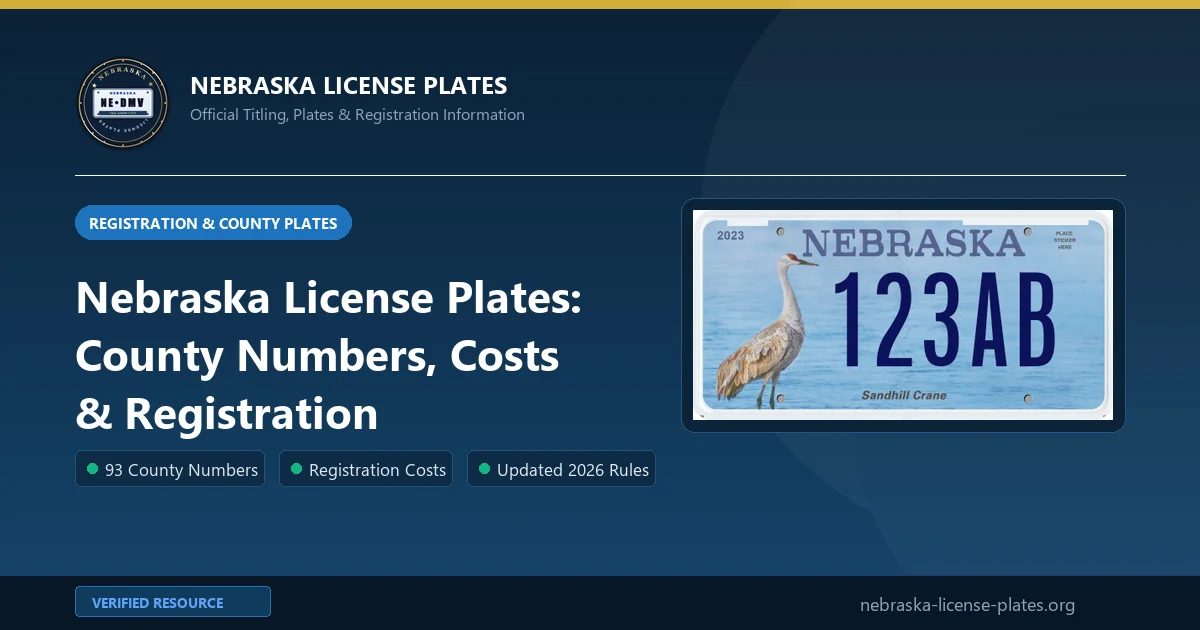
The current standard Nebraska passenger plate features the Sandhill Crane design set against a gradient blue and gold sky. The Sandhill Crane was selected by the state plate committee to honor the annual spring bird migration along the central Platte River valley. The word Nebraska appears in bold lettering across the top border. County numbers or random serial codes stamp across the center.
The state stamps standard tags on reflective aluminum sheeting engineered to reflect headlights up to several hundred feet away. This reflective coating keeps numbers easy to read at night. Patrol officers and road cameras can spot them clearly through winter storms.
The bottom corners of the rear plate hold your colored registration validation decals. The county treasurer assigns a colored month sticker for the lower left corner and a year validation sticker for the lower right corner. Nebraska statute § 60-3,101 requires new passenger plate artwork every six years. This routine update keeps tags looking fresh and stops road salt from peeling the finish.
Specialty and Organizational Plates
Specialty plates help fund state parks, college funds, and historic sites. Car owners pay an extra yearly fee for these special styles.

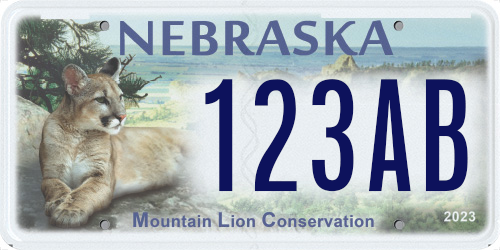

- Mountain Lion Plates support the Game and Parks Commission wildlife conservation fund.
- Husker plates support University of Nebraska sports teams and college aid.
- Breast Cancer Awareness Plates help pay for local health checks and care clinics.
- Pollinator Conservation Plates help protect wild bee and butterfly homes.
- Choose Life Plates support local health care for mothers and newborn babies.
- Ducks Unlimited Plates fund wetland waterfowl preservation across the Platte River valley.
- Henry Doorly Zoo Plates help fund wildlife conservation and education programs in Omaha.
Personalized Message Plates
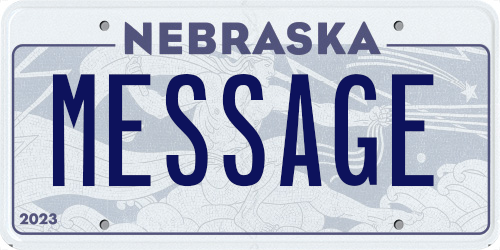
Nebraska lets drivers pick custom words on message plates. You can pick up to six letters on regular tags. Specialty styles allow up to five letters. Blank spaces and hyphens count toward your letter limit.
Personalized message tags cost forty dollars extra each year. State clerks read every request to stop rude words, insults, or confusing letter mixes. You pick up approved message tags at your local county treasurer counter.
Military and Service Plates
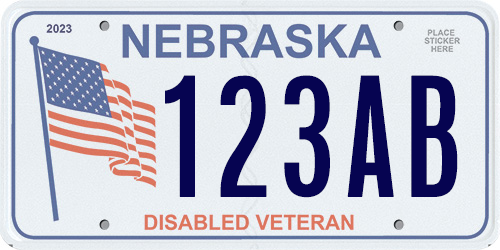
The state offers military plates for armed forces branches and combat veterans. Drivers must show military discharge papers or federal service cards to get them.
- Active Duty Plates honor troops in the Army, Navy, Air Force, Marines, Coast Guard, or Space Force.
- Veteran Plates fit honorably discharged military veterans living in the state.
- Disabled Veteran plates serve former military members who hold service injury records.
- Gold Star Family Plates honor close family members of troops lost in line of duty.
- Purple Heart Plates honor combat-wounded troops with official medal orders.
- Ex-Prisoner of War Plates recognize veterans held captive during foreign conflicts.
Antique and Historic Plates
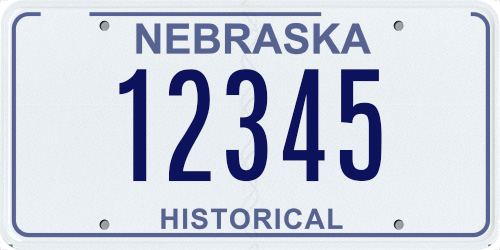
Nebraska issues historical plates for antique cars thirty years old or older. The car must stay in original or restored shape. These tags do not permit daily drives to work or school.
You can drive historic cars to parades, auto shows, and weekend club events. The state charges a fifty-dollar fee for permanent antique plates. These tags never need yearly renewal stickers.
Farm and Commercial Truck Plates
Truck plates look different from passenger tags. Commercial haulers and farm trucks carry weight-stamped plates that show their gross vehicle weight rating in tons. Farm plates cost less than commercial freight plates since farm rigs drive fewer road miles each year.
Farmers qualify for farm plates when using trucks strictly for hauling their own crops, grain, fertilizer, or livestock. Commercial trucks hauling goods for hire must buy commercial freight plates and pay higher highway tax rates.
Nebraska License Plate Fees and Tax Structure
Your plate bill combines small state fees, county charges, and car property taxes. Total costs depend on the age, weight, and original price of your vehicle.
| Fee Category | Statutory Amount | Purpose |
|---|---|---|
| Plate Stamping Fee | $3.30 per pair | Pays for stamping new metal tags |
| Reflector Fee | $0.50 per plate | Keeps tags easy to read at night |
| Base Registration Fee | $15.00 | Supports state road programs |
| County Retained Fee | $1.50 to $2.00 | Helps pay local clerk costs |
| Emergency Medical System Fee | $0.50 | Helps pay for regional ambulances |
| Motor Vehicle Tax | $60.00 to $400.00+ | Helps fund local schools and roads |
| Motor Vehicle Fee | $5.00 to $30.00 | Based on vehicle model year and value |
| Municipal Wheel Tax | $50.00 to $75.00 | Local street repairs in Omaha and Lincoln |
How Motor Vehicle Tax Drops Over Time
Car property taxes go down as your vehicle gets older. A brand-new car pays the highest tax in its first year. By year ten, the tax drops down to minimum rates.
The state sets vehicle tax schedules using the original base retail price of your car when it was new. The state divides cars into price brackets, starting under five thousand dollars and going up to over one hundred thousand dollars. Each year you renew, the state multiplies the original tax by a smaller percentage.
| Vehicle Age | Tax Percentage | Example Tax on $35,000 Vehicle |
|---|---|---|
| Year 1 (New) | 100% of schedule | $460.00 |
| Year 2 | 85% of schedule | $391.00 |
| Year 3 | 72% of schedule | $331.20 |
| Year 4 | 60% of schedule | $276.00 |
| Year 5 | 51% of schedule | $234.60 |
| Year 6 | 41% of schedule | $188.60 |
| Year 7 | 33% of schedule | $151.80 |
| Year 8 | 24% of schedule | $110.40 |
| Year 9 | 17% of schedule | $78.20 |
| Year 10 | 11% of schedule | $50.60 |
| Year 11 and Older | Minimum fixed fee | $30.00 |
This sliding scale explains why two neighbors in the same town can pay very different registration amounts. A driver with a fresh full-size pickup pays several hundred dollars more than a driver keeping a ten-year-old family sedan on the road.
Steps to Register Your Vehicle by Situation
The registration process in Nebraska depends directly on where and how you acquired your vehicle. Buying from a franchised car lot involves dealer tax packets. A private sale runs on a signed paper title, and moving in from another state requires a sheriff inspection. Knowing your exact transaction type helps you gather the correct records on the first try and avoids repeat trips to the county courthouse.
Steps to Register a Car Bought from a Dealership
When you purchase a vehicle from a licensed Nebraska auto dealer, the finance department prepares your primary title documents. Most dealers send your title paperwork straight to your home county treasurer online or by certified mail. Other times, the dealer hands you a paper packet with Form 6 sales tax forms and the manufacturer certificate of origin.
The dealership tapes a temporary cardboard in-transit sticker to your rear window. This temporary tag remains valid for exactly thirty calendar days starting from the date of purchase, not the delivery date. Contact your county treasurer after seven to ten days to confirm your title paperwork arrived from the dealer. Once confirmed, head to the courthouse with your insurance card. Pay your vehicle taxes and registration fees to pick up your metal plates before your thirty-day permit runs out.
Steps to Register a Car Bought from a Private Seller
Buying a car through a private party transaction requires careful attention to the physical paper title. The seller must fill out the back of the title completely. That includes your full legal name, the exact sale price, the date, and the current odometer mileage. Both the seller and buyer must sign the transfer fields. Never accept an open title where the seller signed but left the buyer name blank, as county clerks reject incomplete paperwork under state law.
Ask the seller to write a signed bill of sale detailing the purchase price, vehicle year, make, model, and vehicle identification number. If the seller has an open loan, the lender must sign and date the lien release box on the title face before you can transfer ownership. Take the assigned title, bill of sale, and your Nebraska insurance card to your local county treasurer window. The clerk assesses state and local sales tax based on the purchase price, transfers the title into your name, and issues your new license plates.
Steps to Register a Vehicle When Moving from Another State
If you just moved to Nebraska, you’ve got thirty days to register your car. Nebraska considers you a resident once you take local employment, rent an apartment, purchase a home, or enroll children in a local school district. Do not wait until your out-of-state tags expire to begin this process.
Your first stop must be the county sheriff vehicle inspection station. Drive your car to the designated inspection lane at the courthouse or county impound yard. A deputy sheriff checks the VIN on your driver door frame and dashboard against your out-of-state title. The deputy checks the odometer and signs Form NSP-455. The statutory inspection fee is ten dollars.
Next, take your signed inspection slip, out-of-state title, and Nebraska insurance card to the county treasurer counter. If an out-of-state lender holds your paper title, visit the county treasurer right away. The clerk must send a formal title request letter to your bank. Lenders often take two to three weeks to mail titles, so starting early prevents driving on expired tags as you wait for paperwork.
Nebraska License Plate Laws and Mounting Requirements
State laws set clear rules for mounting plates on cars. Failing to mount plates correctly brings a traffic ticket.
Two Plate Requirement Today
State statute Section 60-399 requires two plates on passenger cars, pickups, and vans. Bolt one plate to the front bumper. Bolt the other plate to the rear bumper.
Plates must mount right side up at least twelve inches above the road. Both plates must stay clean. Brush off snow, mud, and dirt. Setting a loose plate on your front dashboard breaks state law.
License Plate Frames and Cover Restrictions
Nebraska bans plastic covers that hide numbers or block light. Plastic bubbles that turn yellow or trap water break state law.
- Plate frames must not hide the word Nebraska along the top edge.
- Plate frames must not hide your county prefix or plate letters.
- Plate frames must not cover the corner year and month stickers.
- Smoked, dark, or tinted plastic bubbles are completely illegal.
Police officers can pull you over just for a blocked plate. Fines for bad plate displays reach one hundred dollars plus court fees.
The 2029 Single Plate Law Change
The state legislature passed Legislative Bill 97 to change plate rules. Starting January 1, 2029, Nebraska moves to a single rear plate for passenger cars and pickups.
Drivers will get only one plate when registering cars or receiving new plate designs. You will bolt that single plate to your rear bumper. The single plate saves state money on stamped metal. It stops drivers from drilling holes in front bumpers.
Until 2029 arrives, the two-plate rule stays active. Patrol officers still ticket drivers who run without a front plate.
Staggered Registration Renewal Windows
Nebraska spreads car tag renewals across all twelve months. Your renewal month matches when you first registered your car or the first letter of your last name.
The Thirty-Day Grace Period
Nebraska gives drivers a thirty-day grace period after tags expire. If your sticker says August, your tags stay valid through September 30.
Police cannot ticket you for late tags during this thirty-day grace window. Driving after the grace window ends brings traffic fines and added late fees.
Available Renewal Methods
You can renew your tags in three simple ways:
- Online renewal service lets you pay on the state DMV site with your plate number and PIN.
- Mail-in renewal paperwork sent with your renewal card, insurance copy, and check to the county treasurer.
- Courthouse walk-in visits to pay your fees and get your stickers on the spot.
Steps to Replace Lost, Stolen, or Damaged Plates
Driving with missing plates, cardboard tags, or damaged metal breaks Nebraska law. If a tag falls off on the highway or gets crushed in a wreck, don’t wait. Visit your county courthouse right away to buy legal replacement plates.
Steps for Stolen License Plates
If someone steals your plate, call your local police or sheriff first. Officers put the plate number on crime lists right away. This protects you if a thief runs highway tolls or breaks laws with your plate.
Take your police report slip to the county treasurer desk. The clerk cancels the stolen number and sets up a brand-new plate on your car file. The county collects an eleven-dollar replacement fee and gives you fresh stickers.
Replacing Damaged or Faded Plates
If a plate bends in a crash, rusts out, or tears off in a car wash, visit the courthouse. Hand over the damaged metal tags at the desk. The clerk prints a duplicate plate slip and collects the replacement fee.
Transferring Plates When Selling a Car
In Nebraska, license plates belong strictly to the registered motor vehicle owner, not to the vehicle itself. When selling a car to a private buyer, always unbolt both metal plates before handing over the keys. Nebraska law says those tags belong to you, not the car. Leaving tags on a sold car is risky. You could get stuck with unpaid bridge tolls, red-light camera fines, or police questions if the buyer breaks the law.
The purchaser cannot legally drive on your old plates under any circumstances. Private buyers can’t drive on your old tags. They must visit the courthouse to buy a ten-dollar in-transit sticker good for thirty days. This paper sticker tapes inside the rear side window. It gives the buyer legal road time to finish title transfer and registration.
If you buy another car within thirty days of selling your old one, take your old plates to the county counter. The clerk will transfer them onto your new car. The clerk transfers your remaining registration balance and issues updated validation stickers for your new car. Nebraska allows you to transfer your plates to another vehicle of the same registration class without paying duplicate plate stamping fees.
If you sell your car and aren’t buying another one right away, return your plates to the county courthouse within sixty days. The county clerk calculates the unused months remaining on your motor vehicle tax and issues a prorated refund credit voucher. You can use this tax credit slip on future vehicle registrations (or ask for a county refund check, depending on local courthouse rules).
Frequently Asked Questions
Here are clear answers to common questions Nebraska motorists ask about plate fees, front bracket laws, renewal deadlines, and title transfers.
How much do Nebraska license plates cost?
A standard pair of plates costs $3.30 plus a $0.50 reflector fee and a $15.00 base registration fee. Total costs include county vehicle taxes and city wheel taxes. These range from $60 to over $400 depending on your car’s age, original sticker price, and home county.
Does Nebraska require a front license plate?
Yes. Nebraska law currently requires two plates on passenger cars, pickups, and vans. Both plates must remain clean and visible. Nebraska will switch to a single rear plate rule on January 1, 2029 under Legislative Bill 97.
How long do Nebraska temporary tags last?
Nebraska temporary in-transit stickers last for thirty calendar days from your vehicle purchase date. You must complete your title paperwork, pay sales tax, and buy metal plates before those thirty days run out.
Can you keep your plates when selling a car?
Yes. In Nebraska, license plates stay with the person, not the vehicle. When you sell a car, unbolt your plates from the bumper. You can transfer them onto your next vehicle at the county courthouse within thirty days or surrender them for a tax credit voucher within sixty days.
Where do renewal stickers go on Nebraska plates?
Nebraska renewal decals mount on the rear plate only. Stick the colored month decal in the bottom left corner, and stick the year decal in the bottom right corner. Never place renewal stickers on the front plate.
What paperwork do I need to get Nebraska license plates?
You will need four simple documents. Bring your signed title, an unexpired insurance card, sales tax receipt (or tax payment), and a sheriff inspection slip if the car came from out of state.
Official Contact Details
For state rules, title verification records, and administrative assistance, reach out directly to state motor vehicle staff:
Nebraska Department of Motor Vehicles
State Licensing and Motor Vehicle Services Headquarters
STATE HEADQUARTERS
PO Box 94789
Lincoln, NE 68509
Driver and Vehicle Services
Closed on State Holidays