
Nebraska personalized plates, the message plates in the state handbook, print a custom letter combination on the state background for a $40 program fee above the standard registration stack. The county treasurer takes the application, the DMV message screen clears the combination, and the plate issues on the program schedule.
This page covers the application steps, the character limits by vehicle class, the combinations the screen rejects, the full fee stack on a message order, the availability check before the counter visit, and what happens when a message vehicle sells or renews. Every fee figure matches the DMV fee schedule.
How To Order a Nebraska Message Plate
Successfully completing the legal and administrative requirements for how to order a nebraska message plate requires a structured, step-by-step approach coordinated between state DMV requirements and county processing counters. Following the verified statutory sequence ensures your application, certificate of title, and registration tags are validated without administrative rejection. Proceed through each procedural stage in the exact order detailed below.
Check the combination first: the DMV online availability screen runs the letters before the paperwork. Fill the message application: the combination, the vehicle, the owner, the class. Pay the stack: the standard registration fees, the 4 dollar 10 cent plate fee per plate under Section 60-3,102, the 1 dollar 50 cent county fee, and the 40 dollar message program fee. Wait the program print window: message plates print on the production schedule, not same-day at most counters.
The availability screen saves the wasted trip. A combination that fails the screen, taken, blocked, or malformed, never reaches the application stage.
Message Plate Character Limits and Formats
Before appearing in person at your local County Treasurer’s office or submitting automotive applications by mail, you must assemble complete, legally binding documentation. Nebraska administrative law requires original certificates and state-approved application forms to establish clear legal ownership and statutory eligibility. Ensure you bring the mandatory documents and credentials listed below.

Passenger class: up to 7 characters, letters and numbers, one space or no space. Motorcycle class: up to 5 characters on the smaller plate face. Truck classes: the passenger format on the truck fee schedule. Trailer classes: message availability follows the class coverage.
The character count includes the space. A 7-character limit with a space between words leaves 6 letters for the message itself. Numbers and letters mix freely where the format allows, and the screen enforces the class format at the entry step.
What Combinations the DMV Screen Rejects
Navigating the administrative rules and practical requirements for what combinations the dmv screen rejects requires careful attention to both Nebraska Department of Motor Vehicles regulations and local County Treasurer practices. Whether you are managing personal vehicle compliance or handling complex multi-party automotive transactions, proper preparation is key to a seamless process. Review the essential guidelines, statutory criteria, and actionable recommendations detailed below.
Taken combinations: each message issues once in the state, and the screen blocks repeats. Vulgar and offensive terms: the reject list runs by pattern, and the DMV keeps the discretion call. Government lookalikes: combinations that mimic official tags, police, state federal references. Trademarked terms: protected marks the screen holds back. Religious and group slurs: the reject patterns cover them.
The screen runs at application and again at reprint. A combination that cleared years ago re-screens against the current standards when the plate reissues, and a retired combination returns to the available pool when its registration closes.
The $40 Message Fee and the Standard Stack
Total financial obligations for the $40 message fee and the standard stack are governed by standardized statutory schedules set forth under Chapter 60 and Chapter 77 of the Nebraska Revised Statutes. Fees are collected directly by your local County Treasurer and comprise multiple distinct lines, including state motor vehicle taxes based on age and MSRP, county administrative charges, and local municipal wheel taxes where applicable. The essential fee classifications and payment structures are broken down as follows.
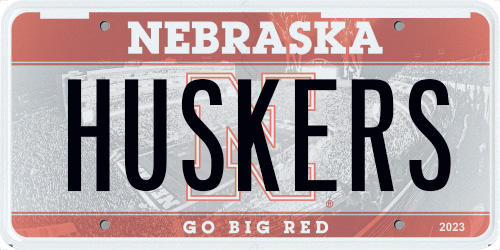
Plate fee: 4 dollars 10 cents per plate under Section 60-3,102, the pair on two-plate vehicles costs 8 dollars 20 cents through the current cycle. County official fee: 1 dollar 50 cents under Section 60-3,141. Registration and motor vehicle tax: the standard schedule on the vehicle. Message program fee: 40 dollars, the one-time program charge on the custom combination.
The renewal keeps the combination without a new program fee. The message fee pays the custom print once, and the renewal stack runs the standard fees on the message plate like any other issue.
Availability Checks Before You Apply
Navigating the administrative rules and practical requirements for availability checks before you apply requires careful attention to both Nebraska Department of Motor Vehicles regulations and local County Treasurer practices. Whether you are managing personal vehicle compliance or handling complex multi-party automotive transactions, proper preparation is key to a seamless process. Review the essential guidelines, statutory criteria, and actionable recommendations detailed below.
Run the combination early: popular words, names, and Husker references go fast, and the screen shows a taken combination in seconds. Prepare alternates: the second and third choice strings, spelled out with the space plan. Screen at the class format: the passenger limit differs from the motorcycle limit, and the screen enforces the class at entry.
The availability answer binds at the counter on the same day. A combination that cleared the screen Monday can sit taken by Friday, and the counter re-runs the check at the application before the fee takes.
Message Plate Transfers and Renewals
Navigating the administrative rules and practical requirements for message plate transfers and renewals requires careful attention to both Nebraska Department of Motor Vehicles regulations and local County Treasurer practices. Whether you are managing personal vehicle compliance or handling complex multi-party automotive transactions, proper preparation is key to a seamless process. Review the essential guidelines, statutory criteria, and actionable recommendations detailed below.
Transfer: the message plate moves to the replacement vehicle of the same class through the county treasurer, and the combination stays with the owner on the transfer. Sale: the plate stays with the seller when the vehicle sells, the registration closes, the message retires or transfers to the next vehicle. Renewal: the standard staggered calendar by surname, the combination prints on the renewal without a new program fee. Retirement: the combination returns to the pool when the owner surrenders it.
The 2029 single-plate change under LB97 halves the message math for covered vehicles. The one reissue plate carries the combination, and the second plate charge falls away at the cycle.
The Worked Example: A Message Order at the Counter
Consider a Lincoln resident wishing to order custom Husker message plates for a newly registered crossover. Before visiting the county treasurer, the driver tests multiple character combinations on the state’s online plate availability screen to verify that preferred letter configurations remain available. Upon selecting an approved string, the driver submits the application and pays the standard $40 annual message plate fee at the counter, receiving standard tags to use while the custom plates are manufactured.
The first string comes back taken, the screen answers in seconds. The second fails the format reject, the space plan not passing the passenger limit. The third clears, and the buyer carries the printout to the treasurer.
At the counter, the application files with the combination and the stack pays: the plate fee at $4.10 per plate, the county fee at $1.50, and the $40 message program fee. The message plate then runs the production schedule, while the standard plates stay on the car through the wait, and the swap lands at the reissue-style exchange at the counter.
Message Plates on Every Vehicle Class
Navigating the administrative rules and practical requirements for message plates on every vehicle class requires careful attention to both Nebraska Department of Motor Vehicles regulations and local County Treasurer practices. Whether you are managing personal vehicle compliance or handling complex multi-party automotive transactions, proper preparation is key to a seamless process. Review the essential guidelines, statutory criteria, and actionable recommendations detailed below.
Passenger: the 7-character format, the standard message face. Motorcycle: the 5-character format on the small plate. Trucks: the passenger-truck classes with the truck fee schedule. Trailers: the message availability follows the class coverage on the program list.
The class governs the transfer. A message combination moves between vehicles of the same class, the motorcycle string stays on motorcycles, and the class mismatch ends at the counter the same way the standard plate transfer ends.
Rejected Combinations: The Real Categories
Navigating the administrative rules and practical requirements for rejected combinations: the real categories requires careful attention to both Nebraska Department of Motor Vehicles regulations and local County Treasurer practices. Whether you are managing personal vehicle compliance or handling complex multi-party automotive transactions, proper preparation is key to a seamless process. Review the essential guidelines, statutory criteria, and actionable recommendations detailed below.
A taken string means another Nebraska owner holds the combination, since the state issues each message once. The pattern rejects cover the terms the standards block: the vulgar list, the slur list, and the government lookalikes. A format failure means the passenger string ran over 7 characters or the motorcycle string over 5, the space plan the class rejects.
The resubmit path runs at the counter. A rejected combination re-enters with the alternates, and the screen re-runs the check on the new strings before the fee takes.
Message Plates and the 2029 Cycle
Navigating the administrative rules and practical requirements for message plates and the 2029 cycle requires careful attention to both Nebraska Department of Motor Vehicles regulations and local County Treasurer practices. Whether you are managing personal vehicle compliance or handling complex multi-party automotive transactions, proper preparation is key to a seamless process. Review the essential guidelines, statutory criteria, and actionable recommendations detailed below.
On the plate count, the message pair on covered vehicles runs two plates through the current cycle, and the reissue drops the front at 2029. The fee line halves the pair charge to one plate at $4.10, while the message fee stays at $40. The combination prints its letters on the single rear face, the class format unchanged.
The message owner renews through the cycle the same way. The multiyear registration option lands with LB97 at the reissue, and the message combination carries onto the multiyear record without a new program fee.
Message Plate Readability: The Display Rule Applies
The custom string serves the same display statute as the standard serial. The message plate must read clearly at the twenty-foot distance, with the characters plain and the combination legible. The zero and the letter O mix freely in the format, and the reader sorts them at distance because the font keeps the pair distinct. The numeral one and the capital I follow the same rule.
The combination never bends the display rule. The message plate mounts upright and unobstructed, and a cover or frame that hides the custom string fails Section 60-3,99 the same way it would fail on any other plate.
The Most Requested Messages: The Pattern
The Nebraska message families run predictable. The Husker strings lead the list, and the football family runs dry early in each cycle. Name plates follow, the surnames and the initials from the personal family. Occupation strings come next, the trade and craft tags. The humor family fills the rest, the jokes that clear the screen and the rejects that never do.
The pattern moves the availability math. The popular families run taken, so the applicant lands the second string or the third, or the spelled variation. The counter re-runs the check on each alternate before the fee takes.
Message Plates as Gifts and Estate Items
The combination follows the owner through life events. On a gift, the message plate moves with the vehicle between the listed family relations, the combination stays with the owner, and the transfer runs the class rules. At the owner’s passing, the message plate retires with the registration, the combination returns to the pool, and an heir applies fresh where the string still clears the screen.
The program tie stays personal. The plate belongs to the person under the program rules, and the estate events read on the registration record the same way the standard plate events read. The combination’s pool status is the one extra program question.
The Application Walkthrough: One Visit, In Order
The visit runs in four steps. Step one: the availability screen, the combination and the alternates, checked before the drive. Step two: the application form, the combination, the vehicle, the owner, the class, all printed clean. Step three: the fee stack, the plate fee at 4 dollars 10 cents per plate, the county fee at 1 dollar 50 cents, and the 40 dollar message program fee. Step four: the receipt, the print window quote, and the drive home on the current plates.
The visit runs under an hour at most counters. The production wait that follows is the only slow part, and the current plates keep the car legal through it.
Message Plates Across State Lines
Nebraska personalized message plates enjoy full legal recognition throughout all 50 United States and Canada under interstate motor vehicle reciprocity agreements. While the customized letter and number combination is cataloged specifically in the Nebraska DMV database, out-of-state law enforcement agencies and toll authorities easily verify vehicle registration by reading the state name alongside the unique personalized serial.
A move out of state ends the Nebraska message. The plate surrenders with the registration, and the home state’s message program serves the new combination, on the new state’s limits and fees. The Nebraska string returns to the pool, and a later applicant may land it.
Key Points: Nebraska Message Plates at a Glance
Understanding the core statutory rules governing Nebraska Personalized License Plates Manual in Nebraska ensures your automotive filings clear state verification without unnecessary delays or counter rejections. Whether you are completing paperwork at your local county treasurer’s counter or checking current compliance across state roadways, keep these fundamental legal requirements in mind.
Program fee: the 40 dollar annual message fee sits on top of the standard stack.
Format: the passenger class runs 2 to 8 characters, and the other classes carry their own limits.
Availability: the online screen rejects taken and conflicting combinations, and the alternates file at the same visit.
Screen rules: the vulgar, the misleading, and the conflicting strings never pass the DMV review.
Fee math: the plate fee at 4 dollars 10 cents per plate under Section 60-3,102 joins the program fee at the filing.
Display duty: the same statute as every plate, the upright face and the twenty-foot read on the custom string.
Estate rule: the combination belongs to the person, and it returns to the pool at the owner’s passing.
Print wait: the production window runs weeks, and the current plates keep the car legal through it.
The eight lines price the custom plate honestly. The 40 dollar premium buys the string, the class limits shape it, and the screen sorts the alternates before the fee takes. The message serves the same display statute the standard serial serves, and the combination the owner keeps follows the owner through the moves, the gifts, and the estate the record closes.
The Message Plate Fee Stack
Total financial obligations for the message plate fee stack are governed by standardized statutory schedules set forth under Chapter 60 and Chapter 77 of the Nebraska Revised Statutes. Fees are collected directly by your local County Treasurer and comprise multiple distinct lines, including state motor vehicle taxes based on age and MSRP, county administrative charges, and local municipal wheel taxes where applicable. The essential fee classifications and payment structures are broken down as follows.
| Fee line | Amount | Statute or source |
|---|---|---|
| Message program fee | $40 | DMV message program |
| Plate fee per plate | $4.10 | Section 60-3,102 |
| County official fee | $1.50 | Section 60-3,141 |
| Motor vehicle tax | By MSRP, age, weight | Section 60-3,185 |
| Sales tax on a purchase | 5.5% state plus local | Nebraska Revenue |
| Renewal message charge | None | Program fee pays once |
The closing read on the message plate is the combination math. The string you want may be taken, the screen says so in seconds, and the alternates you listed file in the same visit. The 40 dollar premium renews with the plate, the print window runs its weeks, and the combination follows the owner through the moves and the gifts the program permits. The display duty never bends for the custom string, the twenty-foot read covers the message the same as the serial, and the cover that hides the letters fails Section 60-3,99 the same way. The plate the screen clears serves the owner a message the road reads for years, and the alternates the visit carried price nothing until one of them takes.
Frequently Asked Questions
Below are clear, factual answers to frequently asked questions regarding nebraska personalized license plates manual under Nebraska Revised Statutes and official county treasurer administrative guidelines. Whether you are navigating statutory filing deadlines, calculating applicable state and local motor vehicle taxes, or verifying required documentation before visiting your local county office, these concise answers explain the exact legal requirements and procedures that govern motor vehicle administration in Nebraska.
How much does a personalized plate cost in Nebraska?
The message program fee runs 40 dollars above the standard stack, and the stack carries the 4 dollar 10 cent plate fee per plate under Section 60-3,102, the 1 dollar 50 cent county fee under Section 60-3,141, and the registration schedule. The renewal runs the standard fees with no new message charge. The program fee pays the custom print once.
How many characters can a Nebraska message plate carry?
The passenger class runs up to 7 characters, letters, numbers, and one space. The motorcycle class runs up to 5 on the smaller face. The space counts toward the limit, and the DMV availability screen enforces the class format at entry. Numbers and letters mix where the format allows.
How do I check if a personalized plate is available in Nebraska?
The DMV online services screen runs the combination before the counter visit. Enter the letters with the space plan at the class format, and the screen answers in seconds. The counter re-runs the check at the application, so a combination that cleared days before can sit taken at the counter visit.
Can the DMV reject my message plate combination?
Yes, the Nebraska Department of Motor Vehicles exercises statutory discretion to reject proposed message plate configurations that conflict with existing serials, incorporate profanity or vulgar references, mimic official government designations, or infringe upon trademarked phrases. All approved plates undergo automated and human screening during every reissue cycle.
Do personalized plates transfer to a new car in Nebraska?
Yes, to a replacement vehicle of the same class through the county treasurer. The combination stays with the owner on the transfer. The plate stays with the seller when the vehicle sells, and the message retires or moves to the next vehicle of the same class. Class mismatches end at the counter.
How long do message plates take to arrive in Nebraska?
Message plates print on the program production schedule, longer than a standard counter issue. The current plates keep the car legal through the wait. Counter staff quote the current print window at the application, and the DMV program page posts the schedule updates.