A stolen plate is a quiet theft. The car looks the same in the driveway, and the pair or the single plate is gone. Nebraska runs the fix in two stops: the police report first, then the replacement at the county treasurer on the plate fee line. The report dates the theft and stands between you and whatever the thief writes on your number. The fee line reads short: 4 dollars 10 cents per plate under Section 60-3,102, and the county fee at 1 dollar 50 cents under Section 60-3,141 on the registration transaction.
This page walks the whole afternoon in order: the police report and the number it hands you, the records desk call at 402-471-3918 that raises the flag, and the replacement transaction at one of the 93 county treasurer offices. It closes with the one-plate-or-pair question through the 2029 reissue, the tickets a thief can write and the report that answers them, the DPPA seal that keeps the thief out of your owner record, and the prevention moves that make the next theft harder. The whole chain fits one afternoon when the desks sit close, and the order never changes.
Start With the Police Report
The report comes first for a reason. It dates the theft, names the plate, and puts the event on a record the county, the court, and the desk can all read. A plate gone from a parked car, a lot, or the bumper on the street is a theft report, not a lost-and-found call.
File where the theft sits: the city police department or the county sheriff’s office. Bring the registration, the plate number if you keep it written down, and a photo of the car with the plates if one exists. The officer writes the report and hands you the number. Write the number down before you leave the desk, because every later step reads off it.
Keep the report copy with the registration papers. The treasurer may ask for the number at the replacement, and a driver who gets stopped before the metal lands can show the report on the dash.
The report also reads at the insurer the way it reads at the county: one date, one event, one number. A policy question that touches the theft opens at the report, and the carrier reads the same paper the treasurer reads. One document, three desks, and the story never shifts between them.
The timing has a one-line answer: file the day you find the plates gone. A gap between the theft and the report is a gap the thief drives on your number, and every citation in the gap gets harder to split. The report written today is the strongest paper the case will ever have.
What the Report Does for You
The report works three jobs at once. It dates the theft, so violations after the date point at the thief and not the owner. It protects you from the tickets a thief writes with your plate: toll runs, gas drive-offs, camera hits on a look-alike car. And it feeds the flag, the watch the records desk can raise on the number.
The protection reads on the dates. A citation issued after the report date meets a document that says the plate was already gone. The contest starts with the report copy, and the dates do the arguing. A driver who skips the report argues a feeling; a driver who files hands the court the day.
The report also dates the insurance story if the theft touches a policy claim. Carriers read the report number the way the county does: as the day the problem started and the day your exposure ended.
Call the Records Desk and Ask About the Flag
The state records desk takes the call that raises the watch. The DVR records desk answers at 402-471-3918, weekdays 8 to 5. Ask that the stolen plate carry a flag on the record, and read the report number into the file. The flag is the note that follows the plate number through the system.
The call takes minutes and saves seasons. A reader that hits the flagged number sees a plate that reads stolen, and the quiet ticket path turns into a second look. The second look lands on the thief’s stop, not yours.
Log the call the way you logged the report: the date, the time, and the name of the person who took the request. If a citation arrives later, the log closes the gap between the theft and the ticket, and the file reads whole.
Ask one more question while the line is open: what does the flag cover. The answer goes in the log with the date, and the coverage question carries a documented answer if a case ever reads it. A flag you can describe beats a flag you hope for.
The desk line also answers the replacement questions before the drive: what the treasurer needs, which lines ride the transaction, and when the metal prints. One call maps the whole afternoon, and the map costs nothing but the minutes.
The Replacement at the County Treasurer
The replacement runs at the county treasurer that holds your registration, one of 93 across the state. The transaction is a plate replacement on the plate fee line: 4 dollars 10 cents per plate under Section 60-3,102. The county fee at 1 dollar 50 cents under Section 60-3,141 rides the registration transaction where the county posts it.
The report number belongs on the transaction. Hand it across with the registration, and the replacement file carries the theft story from the day the metal prints. The same transaction without the number reads as a plain swap, and the dates that protect you never enter the record.
Ask the counter two questions while the transaction runs: what the receipt covers, and when the metal prints or mails. The answers set the drive plan and the dash papers. A receipt that covers the drive is the difference between a clean stop and a citation at the same stop.
The replacement lines at the counter.
| The line | The amount | The source |
|---|---|---|
| One replacement plate | 4 dollars 10 cents | Section 60-3,102 |
| The pair, both gone | 8 dollars 20 cents | Section 60-3,102 |
| County fee on the registration transaction | 1 dollar 50 cents | Section 60-3,141 |
One Plate or the Pair Through 2029
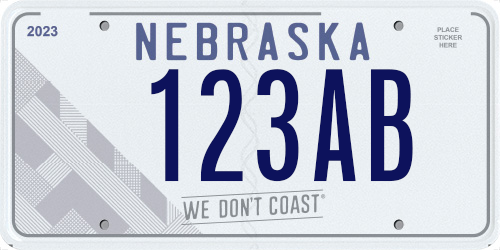
The current cycle runs most passenger vehicles with two plates, front and rear. A thief who takes one plate leaves a car that fails the display count, and the fix replaces the plate that is gone, not the pair. The front plate gone reads the same transaction as the rear: the plate fee line, the report number, the counter.
The 2029 reissue narrows the story. Legislative Bill 97 passed in April 2025 on a 46-0 vote, and at the reissue Nebraska issues a single rear plate and adds multiyear registration. After the cycle reaches a vehicle, the theft question becomes a one-plate question, and the replacement runs one plate on the same fee line.
Through the current cycle, check the surviving plate after any theft. A thief who pulls the rear sometimes loosens the front. A missing bolt is a clue, and the thirty-second walk-around answers it.
The front case carries its own quirk through the cycle. The missing front shows at a stop while the rear reads fine, and the temptation to drive on the rear alone ends at a ticket. The report and the replacement close the gap the same day, whatever the plate position was.
The reissue window adds a third read. A vehicle that reached the 2029 cycle wears one plate, and a theft of that plate leaves the car bare at once. The sequence never changes: the report, the flag, the replacement on the fee line.
What a Thief Can Do With Your Plate
Navigating the administrative rules and practical requirements for what a thief can do with your plate requires careful attention to both Nebraska Department of Motor Vehicles regulations and local County Treasurer practices. Whether you are managing personal vehicle compliance or handling complex multi-party automotive transactions, proper preparation is key to a seamless process. Review the essential guidelines, statutory criteria, and actionable recommendations detailed below.
The list reads worse before the report than after it. Every event below lands on the owner record until the paper splits the dates. After the report, the events point at the thief, and the mailbox quiets. The report is the switch that turns the list around.
- Toll runs: the plate reads at the gantry, and the bill mails toward the plate file
- Gas drive-offs: the lot camera reads the plate, and the store calls the number in
- Camera tickets: the red-light and speed cams read the plate, and the citation follows the file
- A cloned pair: the thief prints a look-alike set and drives a twin car on your number
- The quiet week: the thief waits out the owner who files no report, and the quiet is the trap the paper ends
If a Ticket Arrives That Is Not Yours
The citation lands by mail, and the answer runs on paper, not temper. Send or carry the report copy, the replacement receipt, and the flag call log. The file shows the plate was gone before the citation issued, and the dates carry the case. The thief’s tickets stay with the thief.
Toll accounts run the same defense. The report copy moves the charges off the plate file, and the records desk line at 402-471-3918 answers the questions about what the record shows and when the flag went up.
Do not pay a citation to make it go away. A paid ticket reads as an admission, and it muddies the record the report cleaned. Contest on the paper, and let the dates carry the case.
The pattern case runs the same paper. Two citations on a plate you already replaced read as a pattern, and the pattern reads on the folder: the report date, the flag date, the replacement date, and the tickets that landed after all three. Send the whole folder, not the single ticket, and the story reads in one line.
Keep the tone flat through the contest. The envelope invites anger, and the folder answers with dates. A clean file with three dates and a flag log reads faster than any argument, and the clerk on the other end reads the same papers you do.
The DPPA Seal: Why the Thief Cannot Open Your Record
The thief holds a plate number and nothing else. The federal Driver’s Privacy Protection Act of 1994 seals owner names, addresses, phone numbers, license numbers, and photos inside the motor vehicle record. A plate number alone opens the vehicle story, the make, the model, the year, and the registration standing, and stops at the seal.
The permitted users list is short: insurers, tow operators, government offices, courts, and licensed investigators. A thief running toll cameras is not on the list, and misuse carries civil and criminal penalties. The seal is why a stolen plate does not become a stolen identity in the same afternoon.
Your own moves run inside the permitted lanes. The report, the flag request, and the records desk call all travel the government lanes the act names, and the record stays shut to the public while the case runs.
The seal answers the scary version of the question too. A thief cannot pull an address from a plate number, so the theft does not bend into a doorstep problem. The permitted list is the wall, the 2000 ruling held the wall, and the wall is why the theft stays a plate case.
One boundary keeps the seal honest. The act guards the state record; the papers you carry are the other half. The registration and the insurance card ride out of sight, and the two habits together close the read.
Prevention: Bolts, Light, and Parking
Protecting your vehicle registration credentials and physical license plates against theft, tampering, or fraudulent duplication requires proactive physical security measures. Because vehicle tags and registration tabs are common targets for unauthorized acquisition by bad actors seeking to avoid vehicle taxes, preventative measures are essential. Implement the proven physical safeguards and best practices detailed below.
- Locking bolts: the fasteners that need a special socket, not a thumb turn
- A lit or locked pad: the garage, the driveway light, the plate behind a door
- The walk-around habit: both plates, the bolts, the stickers, once a week
- The photo file: a dated photo of the car with the plates, the record that reads clean at a stop
- The sticker check: a thief sometimes takes the corner sticker with the plate, and the walk-around reads the corners too
Report Versus No Report: The Difference
When evaluating different licensing categories, registration classes, or procedural pathways in Nebraska, understanding how each option impacts fees and paperwork is essential. State statutes establish distinct administrative tracks depending on vehicle weight, operational purpose, and ownership structure. Compare the specific operational requirements, statutory criteria, and administrative impacts below.
The rows share one engine: dates. The report writes the first, the flag carries it, and the receipt closes it. A file with three dates beats an argument with none, whatever the envelope says.
The comparison in one view.
| The case | With the report | Without the report |
|---|---|---|
| A toll bill in the mail | The report date moves it off the plate file | The charge reads clean, and the fight runs blind |
| A camera citation | The report date answers it at the court | The citation stands, and the dates argue nothing |
| The records watch | The flag rides the number, and readers see stolen | The number reads normal, and the thief keeps the lane |
| The replacement counter | The report number supports the file | The case reads as a plain swap with no dates |
The Whole Job in One Afternoon
Navigating the administrative rules and practical requirements for the whole job in one afternoon requires careful attention to both Nebraska Department of Motor Vehicles regulations and local County Treasurer practices. Whether you are managing personal vehicle compliance or handling complex multi-party automotive transactions, proper preparation is key to a seamless process. Review the essential guidelines, statutory criteria, and actionable recommendations detailed below.
- The report: the police desk, the plate number, the copy in hand
- The records call: 402-471-3918, weekdays 8 to 5, the flag with the report number
- The treasurer: the replacement at the plate fee line, the receipt for the dash
- The folder: the report copy, the call log, the receipt, filed with the registration
- The follow-up call: a records desk read a week later, the read on what the record shows now
The Words That Make Each Stop Count
Each desk hears a script, and the script saves the second trip. At the police desk: my plate was stolen, here is the number, here is where the car sat, and I need the report number. At the records desk: please flag this plate as stolen, the report number attached, and tell me what the record shows today. At the treasurer: a replacement plate, the report in hand, the fee line ready.
The scripts share one spine: the plate number, the report number, and the date. Say the three at every stop, and the desks chain without a repeated question. A file that quotes itself never contradicts itself, and the contradiction question never arrives.
One caution keeps the scripts honest. Read the dates from the papers, not from memory, and let the folder do the talking. The theft was the drama; the paperwork is the cure, and the cure runs on clean reads.
- Police desk: the plate number, the loss story, the report number in hand
- Records desk: 402-471-3918, weekdays 8 to 5, the flag and the record read
- The treasurer: the replacement on the plate fee line, the receipt in hand
- The folder: one spine, three dates, every desk reads it fast
Frequently Asked Questions
Below are clear, factual answers to frequently asked questions regarding stolen license plate in nebraska – report and replace under Nebraska Revised Statutes and official county treasurer administrative guidelines. Whether you are navigating statutory filing deadlines, calculating applicable state and local motor vehicle taxes, or verifying required documentation before visiting your local county office, these concise answers explain the exact legal requirements and procedures that govern motor vehicle administration in Nebraska.
What do I do if my license plate is stolen in Nebraska?
File the police report first at the city police or the county sheriff, and keep the report number. Call the DVR records desk at 402-471-3918, weekdays 8 to 5, and ask for a flag on the plate. Then take the report number and your registration to the county treasurer for the replacement on the plate fee line. The chain fits one afternoon when the desks sit close.
How much does a replacement license plate cost in Nebraska?
The plate fee runs 4 dollars 10 cents per plate under Section 60-3,102, so one plate is 4 dollars 10 cents and a pair is 8 dollars 20 cents. The county fee of 1 dollar 50 cents under Section 60-3,141 rides the registration transaction where the county posts it. The counter quotes the print or mail window at the visit. Ask for the receipt before the drive home.
Can someone use my stolen license plate?
Yes. A thief can run tolls, gas drive-offs, and camera tickets on a look-alike car until the number reads stolen. The police report dates the theft and separates your driving from the thief’s. The flag the records desk raises tells every reader the number is hot. The paper you file on day one is the protection. The report is the line between the two stories.
Will I get tickets for a stolen license plate in Nebraska?
Not with the report on file. A citation issued after the report date meets a document that shows the plate was already gone, and the contest runs on the dates. Carry the report copy, the replacement receipt, and the flag call log. The file answers the court, and the thief’s tickets stay with the thief. The dates carry the case at the court.
Do I need a police report to replace a stolen plate?
The report is the move that protects you, whatever the counter asks for. It dates the theft, supports the flag at the records desk, and stands behind you if the thief writes tickets on your number. The replacement itself runs on the plate fee line, 4 dollars 10 cents per plate, with the report number on the file. The counter confirms what it needs on the call ahead.
When does Nebraska switch to a single license plate?
At the 2029 reissue. Legislative Bill 97 passed in April 2025 on a 46-0 vote, and the reissue ends front-plate issuance, with a single rear plate and multiyear registration rolling through the fleet. Until a vehicle reaches the cycle, the two-plate rule runs as it does today, and a stolen front plate still means a replacement. The theft sequence never changes with the plate count.