

A Nebraska trailer plate is the tag a towed unit carries, and it registers apart from the truck or SUV that pulls it. The county treasurer issues it, the trailer’s weight sets its class, and the fee lines follow that class. The step matters at every stop: a rig with an unregistered trailer behind it reads as two vehicles, one legal and one not, and the citation lands on the trailer’s owner.
This page covers the weight classes and how the counter sorts them, the lighter farm and ranch lines, the fee schedule from the $4.10 plate line to the weight-class fees, the staggered renewal calendar, the rear display rules, the towing checks that keep a plate legal, the first registration after a purchase, and the exit steps when you sell, move, or retire the rig.
The Trailer Registers on Its Own Line
Nebraska treats a trailer as its own vehicle. The truck in front carries its own plate and registration, and the trailer behind it carries another. Two records sit side by side at the county, and each renews on its own line. A stop that finds an unregistered trailer reads two vehicles: one legal, one not. One plate reads the truck, one reads the rig, and the stop reads both.
All 93 county treasurers run the system. Trailer titles, registrations, and plates sit at the same window as the family car, in the county where the owner lives. Cross a county line and the file moves at the next renewal. The plate follows the owner’s address, never the hitch or the tow vehicle. The office in the county of residence papers the file, whatever county the sale ran in.
Every trailer filing opens with a weight read. The clerk takes the empty weight off the title or the scale slip, the weight picks the class, and the class sets the fees, the renewal, and the display rules. Answer the weight right and the rest of the case lines up behind it. One number on the title drives the whole filing, and the clerk reads it first.
When a Small Trailer Needs No Plate
Not every trailer behind a truck carries a tag. The registration classes cut by weight, and the lightest units can sit under the line where the plate duty starts. A small utility trailer, a light folding camper, or a low-weight hauler can land on the no-plate side of the schedule. Plenty of yard and garden trailers sit under it, and the schedule decides which ones.

The counter reads two answers: the empty weight and the use. Weight sets the class line, and the use can move the result, especially on farm and ranch work. A unit under the line needs no plate at all. A unit over the line registers by its class, the same as any other rig. The read takes a minute, and the class answer prints on the case the same visit. Where the answers split, the counter reads the heavier line and says so up front.
Ask before you tow, not after a stop. The question costs nothing, the clerk settles it in a minute, and the answer holds until the frame or the use changes. A trailer that gains a heavier frame or a bigger axel set can climb a class, and the plate duty can start with the change. One visit prices the case and ends the question for the life of the rig.
- The weight read comes off the title or the scale slip, the empty weight.
- The use read covers the work the trailer runs: farm, yard, or road.
- The counter answer is a plate, or none under the class line.
How Weight Sorts the Classes
The classes run by weight, lightest to heaviest. Small units sit in the low classes, mid-size haulers climb the middle, and the heavy rigs price at the top. Farm trailers carry their own set of lines, lighter than the standard classes for the same size rig. The table below reads the cases the window sees most.
The counter confirms the exact class every time. Class lines move with the statutes, and the clerk checks the current schedule against your title before any fee runs. Never price a trailer off a neighbor’s plate; the class on your title is the class that charges you.
The class reaches past the fee. It sets the renewal line, the display rules, and the tax lines where the class takes one. Two trailers that look alike can sit a class apart over a small weight spread, and the title read catches the split at the window.
How the counter reads a trailer at the window.
| Case at the window | What the clerk reads | What follows |
|---|---|---|
| Small utility trailer | Empty weight against the class line | A plate, or none under the line |
| Mid-size hauler | Weight class on the current schedule | Standard fee lines and renewal |
| Heavy equipment rig | Weight plus the tow use | Top class lines and heavier fees |
| Farm or ranch trailer | Use plus the lighter farm line | The lighter farm fees the statute runs |
Farm and Ranch Trailers Run Lighter Lines
Farm work prices lighter. A trailer that hauls stock, feed, or equipment between fields, barns, and the sale barn serves the operation, and the statute writes its own lighter lines for that use. The same size rig built for freight reads another way, and the fees read with it. The lighter set shows up on the first quote, not at the first stop.
The use test does the sorting. The clerk reads what the trailer hauls and for whom, and the farm line applies where the work serves the farm or ranch. A rig that hauls for pay on the open road reads as freight, and the standard class lines charge it. The line the clerk picks shows on the first fee quote, and the quote is the place to catch it.
Confirm the line at the counter every time. Farm reads turn on details the clerk knows how to weigh: the operation, the use, the weight. One visit prices the rig on the right schedule, and the renewal holds that line year after year while the use stays the same. The county re-reads the line at renewal, and the schedule holds while the use holds.
The Fee Schedule at the Counter
The plate itself prices small. A plate runs $4.10 under statute Section 60-3,102, so a pair costs 8 dollars 20, and a replacement plate prices on the same line. The county adds its official fee, $1.50 under statute Section 60-3,141, on the filing. The plate line never moves, whatever the class or the weight.
The weight class carries the bigger lines. The motor vehicle fee runs 5, 20, or 30 dollars by weight class, multiplied by an age fraction that starts at 1.0 and steps down to 0.70, then 0.35, as the rig ages. Where a class takes a tax line keyed to the state schedule, the clerk prices it on the same read.
Ask for the whole total before you pay. The counter quotes the plate line, the county line, the class lines, and any program fee at once, and the receipt itemizes the stack. A program design, where the class takes one, adds the $40 a year program fee on top of the base lines. The receipt answers every later question about the stack in one page.
The lines a trailer filing can carry.
| Line | The number | Where it comes from |
|---|---|---|
| Plate fee | $4.10 a plate, $8.20 a pair | Statute Section 60-3,102 |
| County fee | $1.50 | Statute Section 60-3,141 |
| Motor vehicle fee | $5, $20, or $30 by weight class | Times the age fraction: 1.0, then 0.70, then 0.35 |
| Message plate fee | $40 a year | The personalized plate program, where the class takes one |
Renewal on the Staggered Calendar
Trailer renewals follow the staggered calendar every class runs. The renewal month keys to the owner’s surname initial or the purchase date, the month posts on the card and the sticker, and a trailer can renew in a different month than the truck that pulls it. Each line keeps its own clock.
Most counties take ClickDMV, the online renewal portal, for a clean renewal. The portal reads the fee lines, the insurance where the class calls for it, and the address on the file. Changes to the address, the name, or the class go to the counter instead.
Renew early in the month. The portal and the counter both run faster before the last-day line, and the receipt answers a stop while the sticker prints. A lapsed month reads on the plate at any distance, and the citation follows the owner on the file. The calendar, the portal, and the receipt together cover the whole month.
- Renewal month: keyed to your surname initial or the purchase date, posted on your card.
- ClickDMV: the online portal most counties take for a clean renewal.
- The counter handles address, name, and class changes before the renewal.
- Keep the receipt, the paper that answers a stop while the sticker prints and mails.
- The plate light is the bulb that keeps the rear read alive after dark.
Display: The Rear Plate Rules
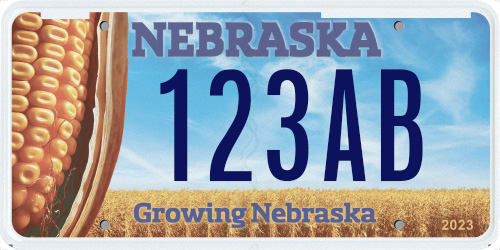
A trailer plate rides the rear, upright, characters out, plainly visible. The characters read at a distance, day and lit night, with nothing over the print: no tinted cover, no frame edge, no mud caked across the face. The plate light on the rig keeps the read alive after dark. A plate that reads clean passes at any distance, day or night.
The mount runs on hardware, not tape. Bolts through the plate slots hold it firm, zip ties and adhesives fail the secure read, and the push test at the hitch answers the mount question in a second. A plate that swings at speed draws the stop a firm plate never invites. The secure mount reads the same on a small utility rig and a heavy hauler.
The state moves to one rear plate at the 2029 reissue. Legislative Bill 97, passed April 2025 on a 46-0 vote, ends front-plate issuance at the reissue and adds multiyear registration terms. Trailer classes already ride the rear, so the change lands on their paper terms more than their glass. The reissue reaches each trailer as its cycle turns, and the new terms land at the filing after it.
Towing Checks That Keep the Plate Legal
The plate is one piece of the tow picture. The rig behind the truck needs lights that answer the tow vehicle, a hookup that holds, and spray control where the rig throws road grime. A plate buried in grime fails the plainly visible read the same as a tinted cover fails it. The tow picture reads whole at a stop: the plate, the lights, and the rig in one walk-around.
Run the walk-around at every hookup. Thirty seconds at the rear covers the read, the lights, and the spray lines, and the check ends before the wheels turn. A clean rig reads legal at any stop, and the stop, if one comes, ends in a minute.
The checks travel with the seasons. Winter brine cakes the face, summer dust dims the print, and the first rain after a dry spell throws the worst spray. A glance at the plate at every fuel stop keeps the read on the legal side all year. A wet-weather glance costs nothing and catches the worst the seasons throw.
- For the plate read, step back and read the characters before you hook up.
- Run the light check: brake, turn, and marker lights answer the tow vehicle every time.
- The spray line matters too: a mud flap where the rig throws grime keeps the plate and the drivers behind you clean.
- On the hookup, hitch, chains, and breakaway gear hold the rig behind you, not beside you.
- The plate light swap keeps the night read alive through the dark half of the year.
Buying a Trailer: Title and First Registration
A private sale starts a clock. The buyer files the title at the county treasurer within 30 days of the sale, and the registration prints with the filing. The seller keeps the plates or surrenders them under the transfer rules, and the seller’s notice closes the seller’s line at the sale date. The notice costs nothing and closes the biggest open door on the seller’s record.
A dealer sale hands off clean. The dealer releases the signed papers at the exchange, the buyer carries the set to the treasurer, and the counter reads the title, prices the class, and prints the plate and the card in one visit. The buyer drives home with the plate on the rear and the card in the glovebox. The set, the fee, and the plate all run at one window on one morning.
Bring the set the counter reads: the signed title, photo ID, the insurance details where the class calls for the read, and the payment for the total the clerk quotes. One visit finishes the job, and the receipt covers the mail window while the plate and card print. The counter prices the class before anything prints, and the quote is the number on the receipt.
Selling, Moving, or Retiring the Trailer
A sale ends your line in two steps. Notice the county that holds the registration, with the sale date on the paper, and take the plates off at the exchange. The notice dates the sale and ends your exposure to whatever the rig hauls next, and the plates go to the counter or your next trailer. The date on the notice is the line every later question starts from. The plates never ride the sold rig, whatever the buyer says at the exchange.
The plates surrender or transfer. A replacement rig of the same class can take the plates through the treasurer, and the transfer prices on the base lines where a new plate prints. A retired rig sends the pair back to the window, and the receipt proves the date they left your hands. The counter quotes both paths on the same visit.
A move out of state ends the line on its own clock. Surrender the Nebraska plates, notice the county, and register in the new state on its calendar. The county receipt ties the surrender to a date, and the Nebraska record closes clean behind the move. The new state sets its own fee lines and its own window, and the clean close reads on both files.
Where the Work Gets Done
Every step on this page runs at a county treasurer. All 93 offices take trailer titles, registrations, plates, renewals, and the notices that close a sale, and the class lines and fee schedules post at the counter. The office in your county of residence holds the file, whatever county the sale ran in. The counter answers the class, the fees, and the calendar for your rig in one read. A specific rig reads on its specific file, and the counter knows the case in one look.
The state desk answers what the county cannot. The DMV Driver and Vehicle Records desk takes calls at 402-471-3918 on weekdays from 8 to 5, and the main line runs 402-471-2281. The headquarters sits at 301 Centennial Mall South, PO Box 94789, Lincoln NE 68509-4726. Both lines answer the questions a specific trailer raises. Both lines answer the case before the drive, whatever the trailer raises.
Call before you load. A two-minute read on the class, the farm line, or the fee total turns the counter trip into the whole job. The answer on the phone settles in minutes what a guess stretches into a second trip and a week of waiting. One call ahead sets the visit, and the title in hand finishes it.
Frequently Asked Questions
Below are clear, factual answers to frequently asked questions regarding nebraska trailer license plates – registration and fees under Nebraska Revised Statutes and official county treasurer administrative guidelines. Whether you are navigating statutory filing deadlines, calculating applicable state and local motor vehicle taxes, or verifying required documentation before visiting your local county office, these concise answers explain the exact legal requirements and procedures that govern motor vehicle administration in Nebraska.
Do trailers need license plates in Nebraska?
Most do, and the class runs by weight. The lightest units can sit under the line where the plate duty starts, and farm trailers price on their own lighter lines. The county treasurer reads the empty weight and the use against the current schedule and tells you in one visit whether your trailer needs a plate. The read costs nothing, and it settles the class line for good.
How much does it cost to register a trailer in Nebraska?
The plate fee runs $4.10 per plate, or $8.20 a pair, under statute Section 60-3,102, plus the $1.50 county fee under Section 60-3,141. The motor vehicle fee adds 5, 20, or 30 dollars by weight class, times an age fraction that steps down as the rig ages. The counter quotes the exact total for your class. Ask the window to itemize the stack before you pay.
How do I renew my Nebraska trailer registration?
Renew in the month your card shows, on the staggered calendar keyed to your surname initial or the purchase date. Most counties take ClickDMV for a clean renewal, and the counter takes the cases with address, name, or class changes. Renew early, and carry the receipt while the sticker prints and mails. A receipt in the glovebox answers a stop at any hour.
Where does the plate go on a trailer in Nebraska?
On the rear, upright, with the characters plainly visible day and night under the plate light. Nothing covers the print: no tinted cover, no frame edge, no caked mud. The mount runs on bolts through the plate slots, not tape or zip ties, and the plate reads at a normal walk-up distance. A quick push test at the mount answers the secure question in a second.
Do farm trailers cost less to register in Nebraska?
Yes, farm and ranch trailers carry their own lighter lines. The use test matters: a rig that hauls stock, feed, or equipment for the operation prices on the farm schedule, and a rig that hauls for pay reads as freight. The treasurer confirms the farm line against your use before the fee prints. One visit settles the line and the price together.
What do I do with my trailer plate when I sell it?
Take the plate off at the exchange and notice the county that held the registration. The plates surrender at the counter or transfer to a replacement rig of the same class through the treasurer. Any refund on the unused term is not automatic; the county rules decide, and the counter quotes your case. Take the receipt either way, and the plate line closes on the date it carries.